
Create your own civilization.
A card game across seven eras — from the Stone Age to the distant future. 350+ cards, illustrated by four artists over a year.
Kickstarter soon — first 100 backers get −40%
7ERAS: seven eras on the table
Build, trade, develop technologies, wage war and survive cataclysms — 50,000 BC → 2200+


“War is the continuation of politics by other means.”
“There is nothing permanent except change.”
“The supreme art of war is to subdue the enemy without fighting.”
“Waste no more time arguing about what a good man should be. Be one.”
“Civilizations die from suicide, not by murder.”
PANTHEON: Do Gods Play Dice?
Seven mythologies. Forty-two god cards. One goal — become the god above gods.
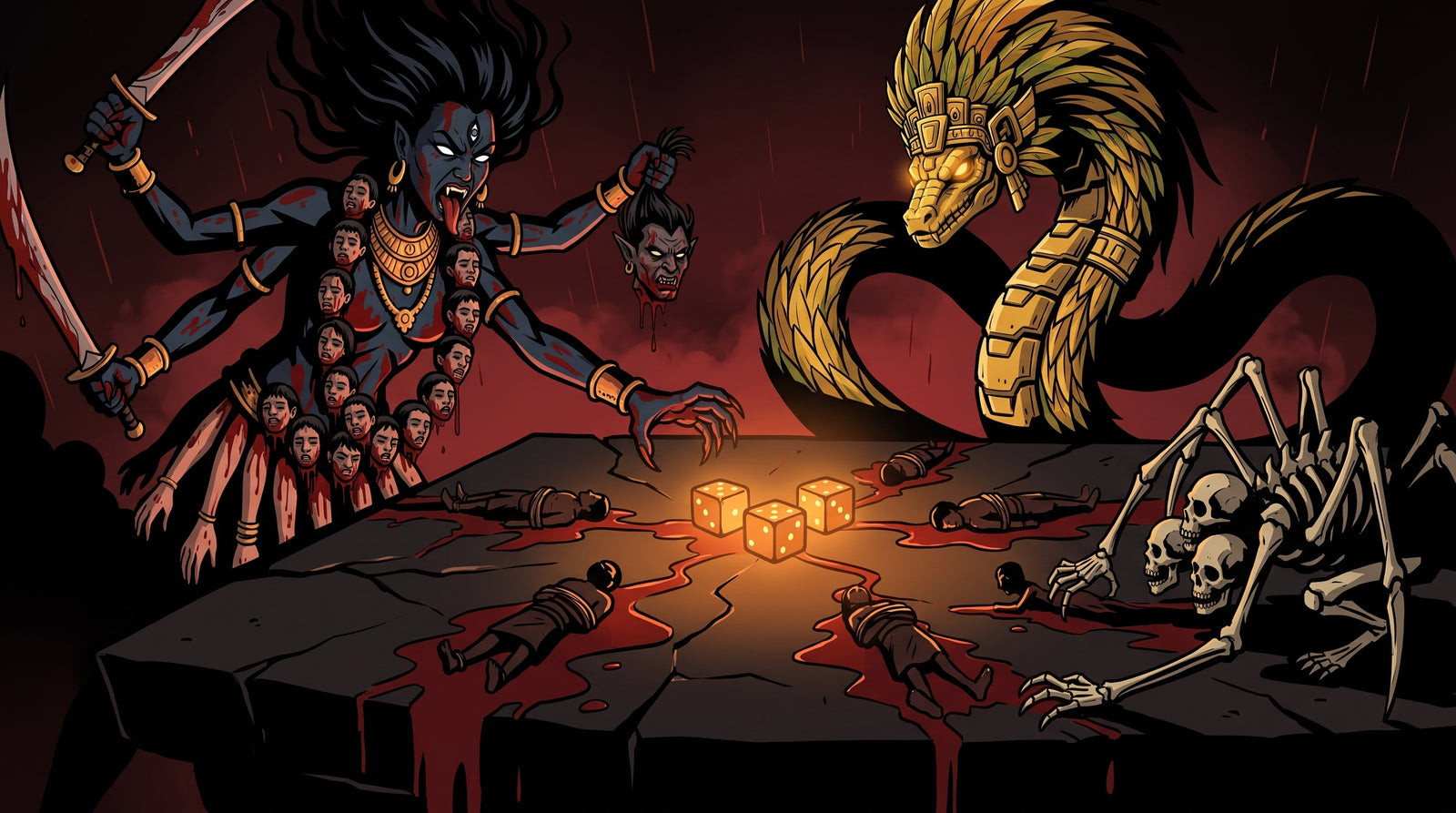
Do gods play dice?
Einstein said God does not play dice. He simply never saw this table. Seven mythologies, forty-two god cards, one goal — become the god above gods.
They don't save worlds and they don't fight for territory. They play by rules they wrote themselves, for a stake they set themselves. Mortals lie on the table. Dice hang in the air — and until they land, no one knows how this ends. Not even the gods.
PANTHEON is an asymmetric card strategy where every faction plays by its own philosophy of death. You don't just race for points — you prove that your way of looking at death is the right one.
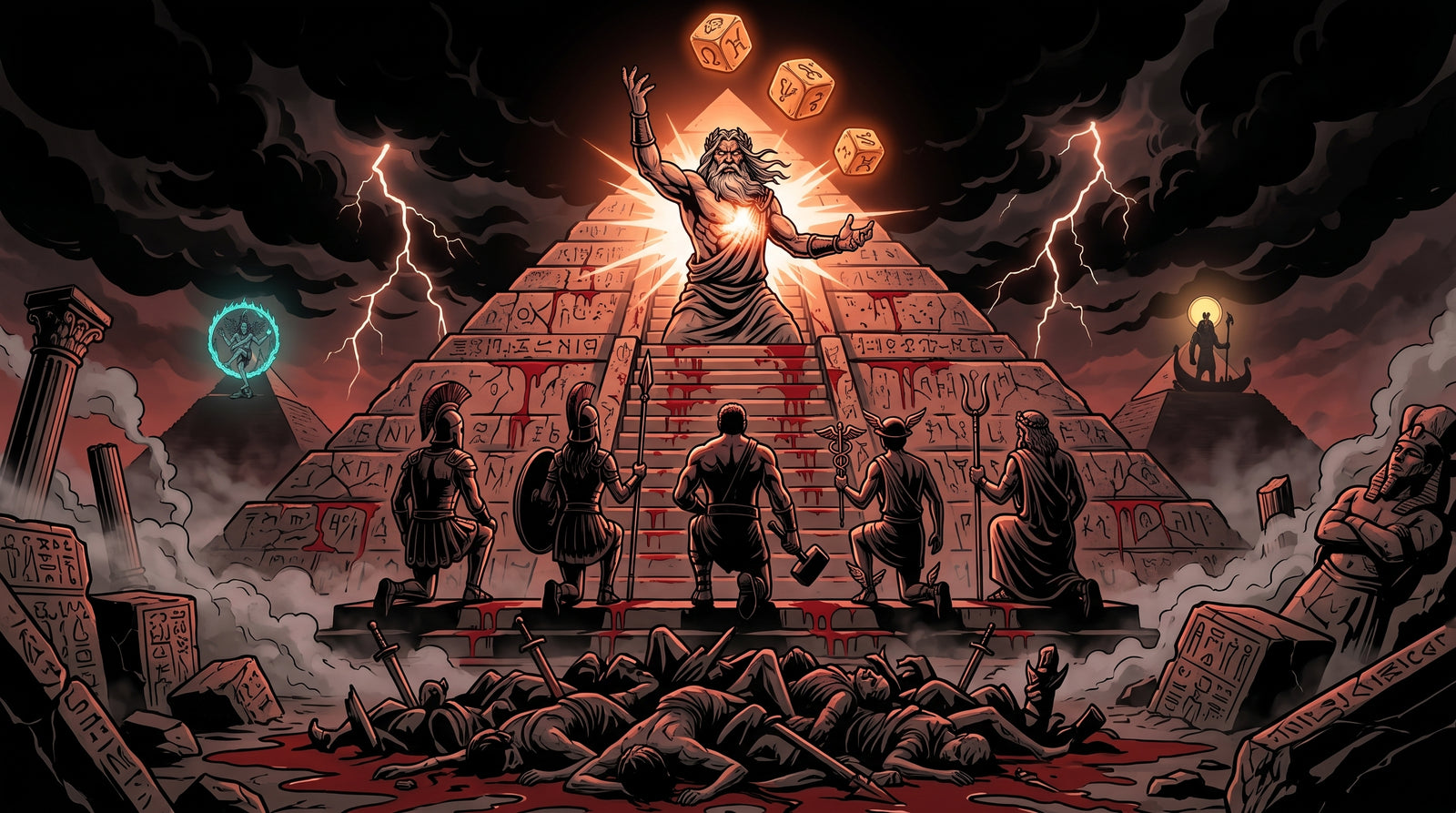
Build the pyramid. Defy fate.
Your faction is six gods in hand. To win, place them all in the Pantheon Pyramid — three in the Foundation, two in the Pillars, one at the Summit — then survive Apotheosis.
Every build is a roll of three dice against a threshold: Foundation ≥9, Pillars ≥10, Summit ≥11 — and every god already in place adds +1 to the next roll. The pyramid helps itself grow.
When all six stand, comes Apotheosis — a final roll against 12. A quiet pacifist reaches that roll with a 38% chance. A veteran with four Battle Blood tokens — 84%. Divinity is not given to those who avoided blood.
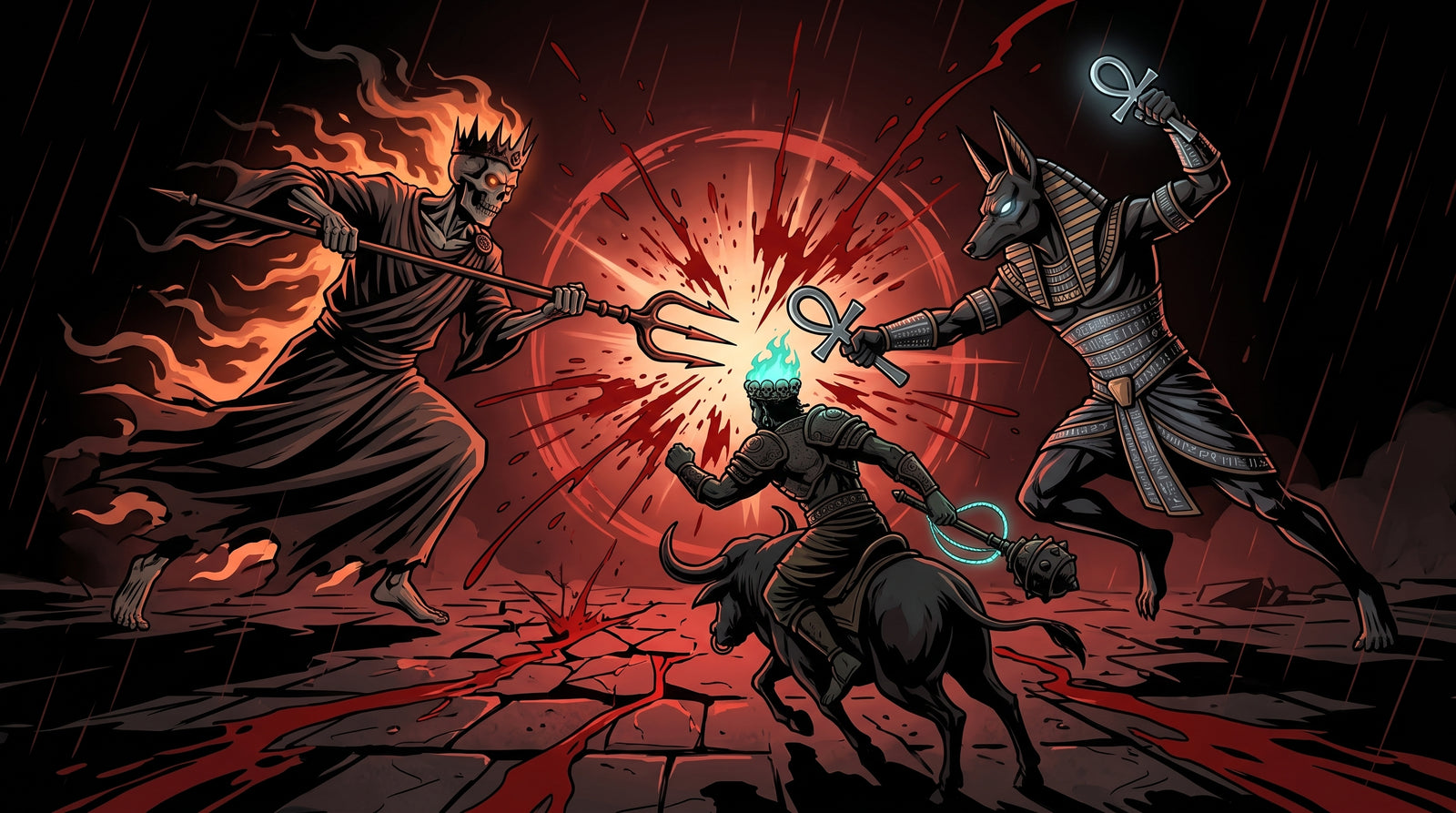
A triangle with no way out
Fire breaks Stone. Stone blocks Water. Water quenches Fire. You don't choose your enemy — the triangle decides for you, for the whole game.
Every turn you must do one of two things. WAR — attack a god in your enemy's pyramid: both reveal up to three resource cards, the higher total wins, the winner takes Battle Blood. TRADE — exchange cards face-down with your fixed partner, and both draw a bonus card of peace.
Peace gives resources. War gives the only thing that makes victory real. There is no diplomacy here — only the choice of how far to go in what is already fated.
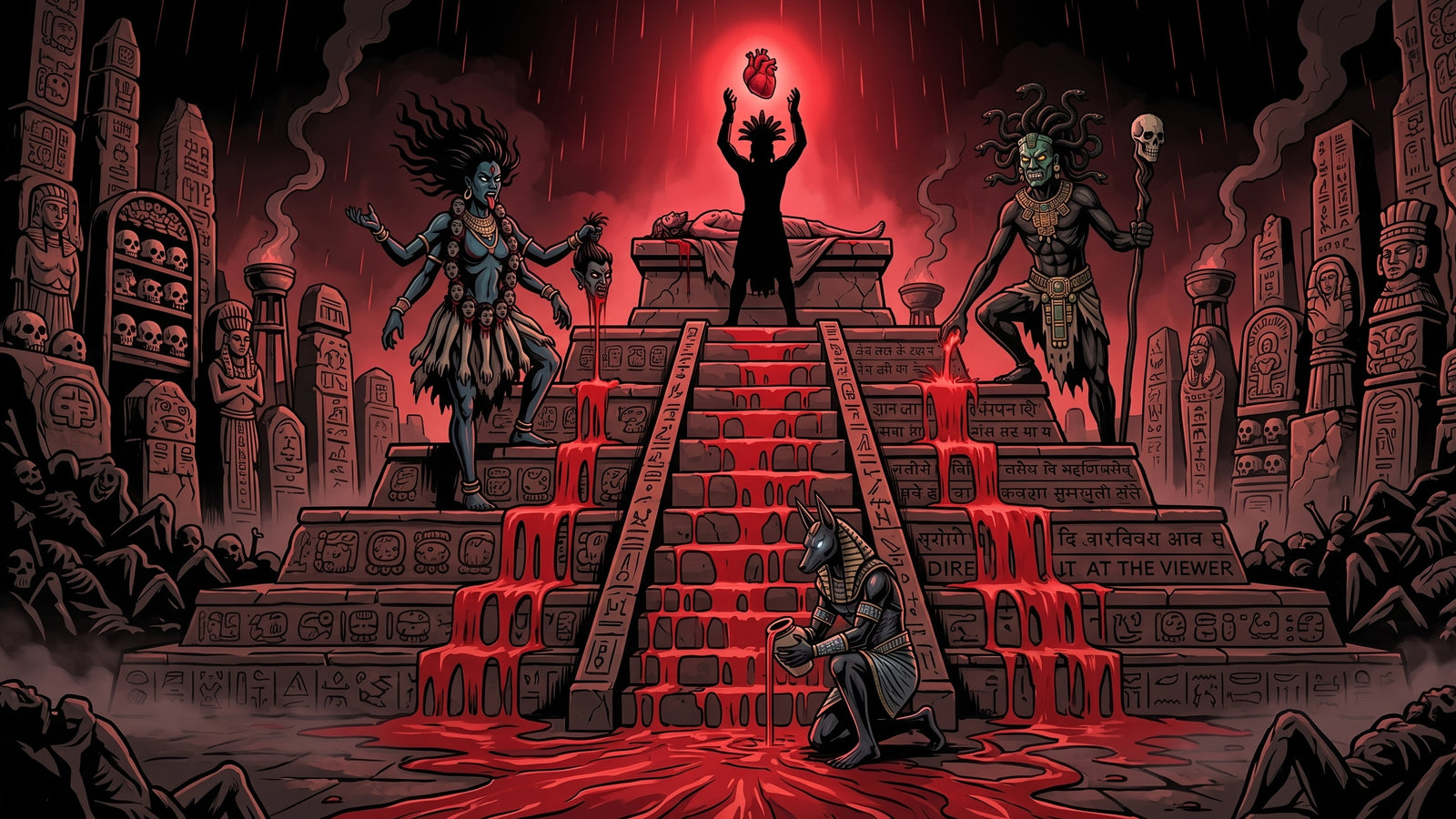
Blood is the only currency with weight
Four resources in the deck: Flame, Stone, Water — and Blood. The first three are building material. Blood is power, and there are only eight cards of it. For everyone.
Blood is the strongest card in battle. Blood is required to place a god at the Summit. And Battle Blood — eight tokens that never burn — is the only thing that makes Apotheosis reachable.
Gods don't produce blood. Mortals shed it. The whole economy stands on someone dying below — in wars, on altars, on ritual courts. The game doesn't moralize about it. It simply makes it obvious.
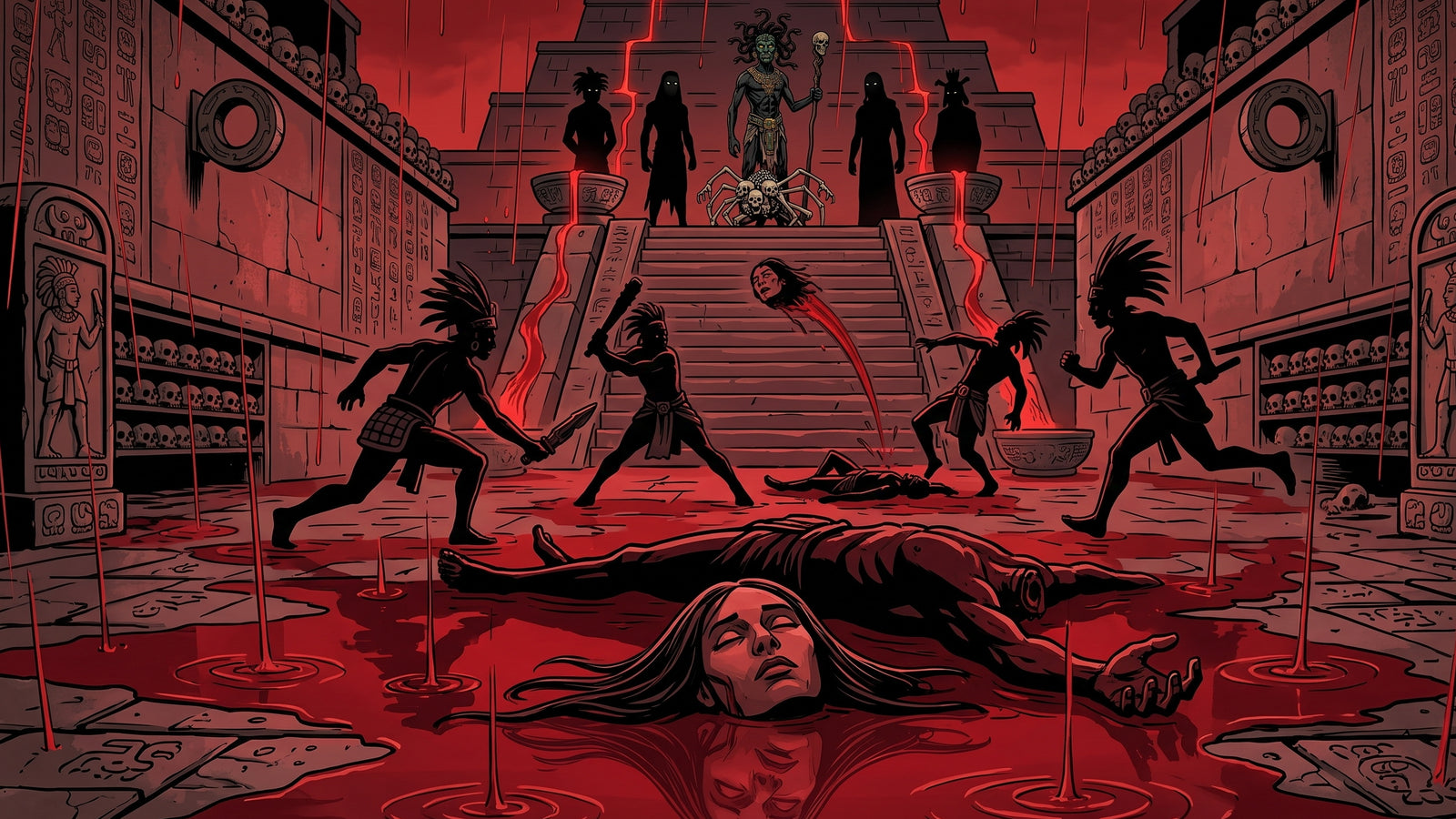
Below, they die. Above, they count.
In Maya myth the ritual ball game was not sport — it was a trial. The losing team went to the altar, and blood climbed the pyramid steps as payment for the sun to rise tomorrow.
The Aztecs and Maya believed the world runs on blood — not metaphorically, literally: without sacrifice the cycle stops. That is why altars stood on the tops of pyramids, not in cellars: blood had to flow upward, to those who accept it.
This exact logic became the economy of PANTHEON. Resources don't appear from thin air — they come from mortals below and rise to the gods. And the closer you are to victory, the more blood is behind you.
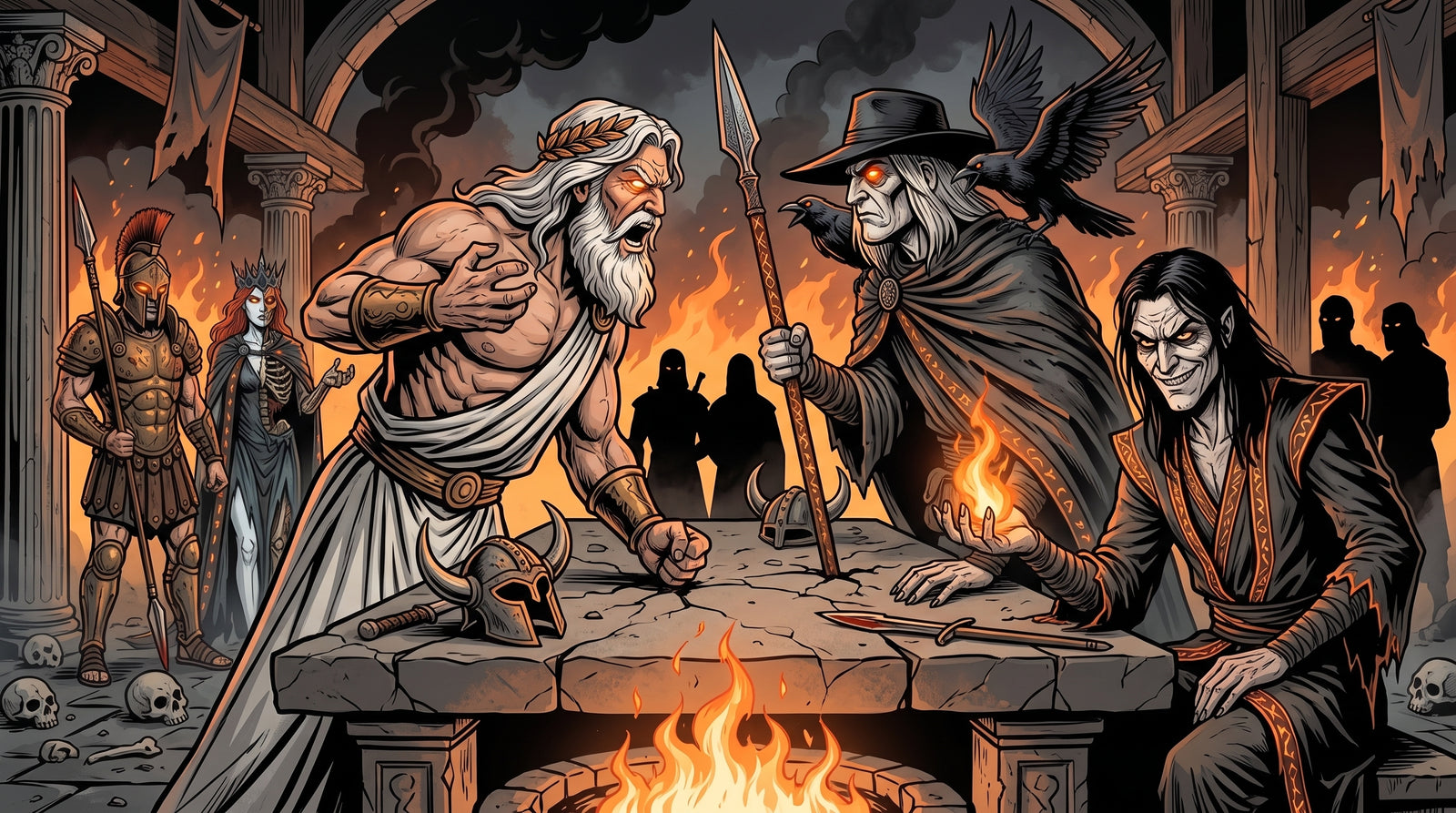
🔥 Fire — death is the price of heroism
Greeks and Norse shared one idea: death is worth it if they will speak of you. Achilles knew he would die at Troy — and went anyway.
Hubris: every won war gives +1. Every two Hubris add strength in battle — but at six the crisis begins: a faction that won too much starts striking itself. In battle Fire doubles Flame: two points become four.
Fire doesn't scheme. It strikes first and harder — and pays for it with its own Ragnarök. Play Fire if stockpiling Battle Blood excites you more than keeping it safe.
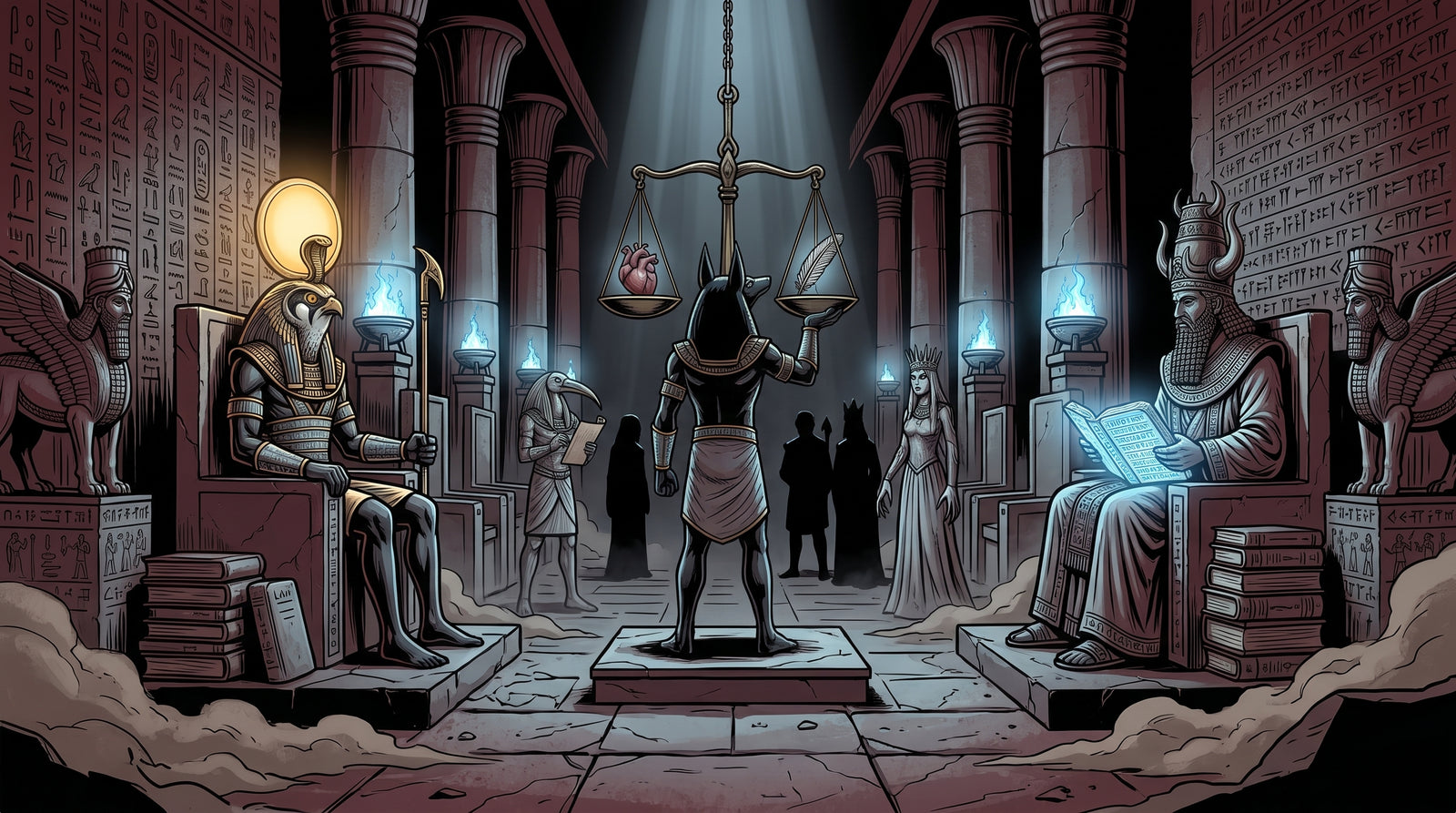
🪨 Stone — death is a transfer to order
The two oldest written civilizations imagined the afterlife as an institution: scales, a feather, a protocol — the Book of the Dead literally contains the exam's correct answers.
Maat: once per round, look at the top card of the deck and decide — leave it or send it to the bottom. Stone is the only one who knows what comes next. In battle it doubles Stone — the cheapest, dullest, defensive resource.
Stone rarely wins loudly. It wins because it calculated the game two turns ahead while everyone else was busy fighting. Play Stone if controlling information pleases you more than raw strength.
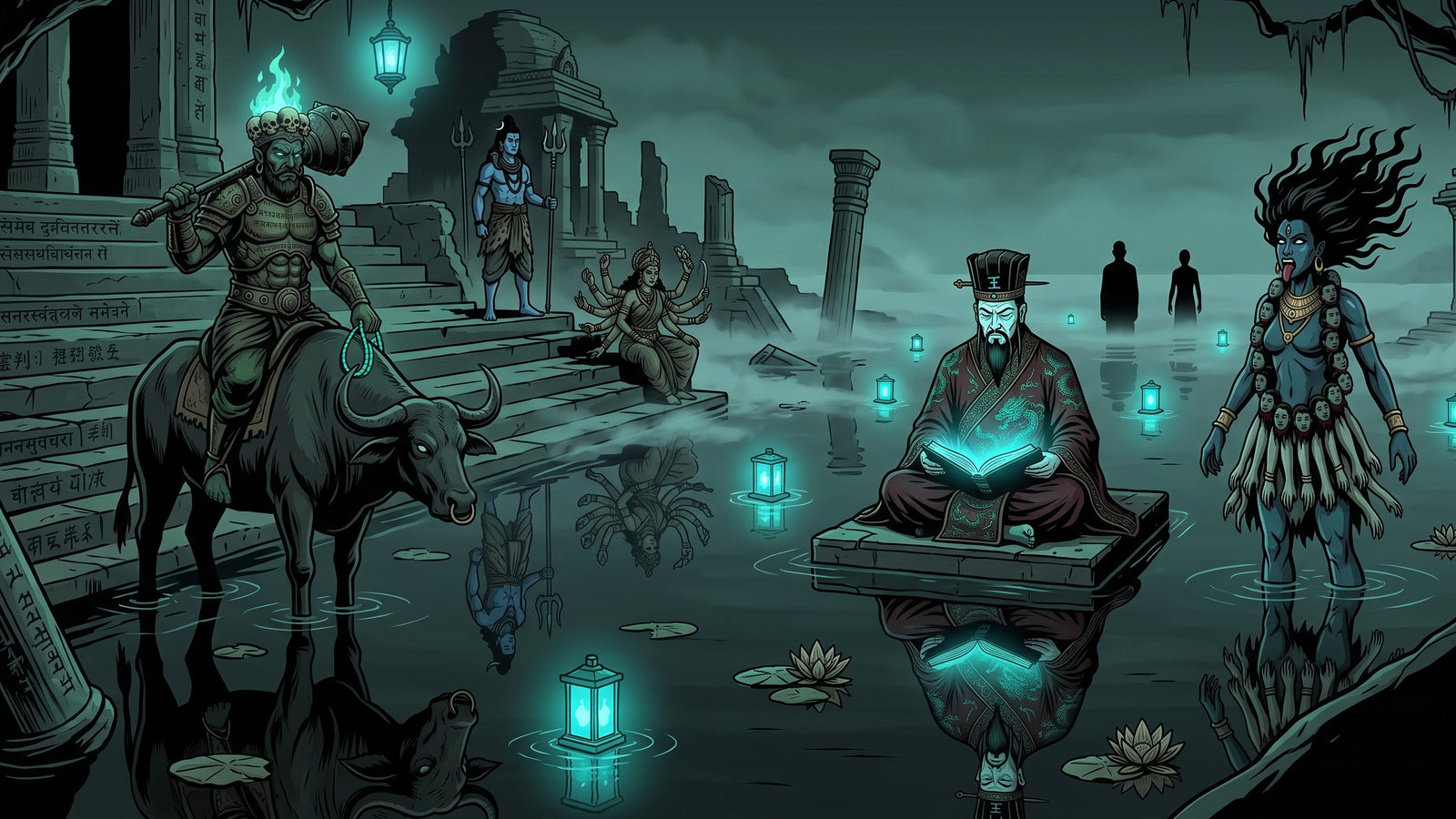
💧 Water — death is an illusion, everything flows
Neither tradition sees death as a full stop. In India it is samsara, the wheel of rebirth. In China, Diyu is ten courts that judge a soul — then send it back into a new life.
Karma: when a Water god is knocked out, roll a die — on four or more it returns, and with a bonus resource. Water cannot be removed for good.
In battle Water doesn't attack — it quenches: every Water card removes two Flame instead of one, turning Fire's own strength against it. Play Water if you would rather outlive everyone than defeat everyone.
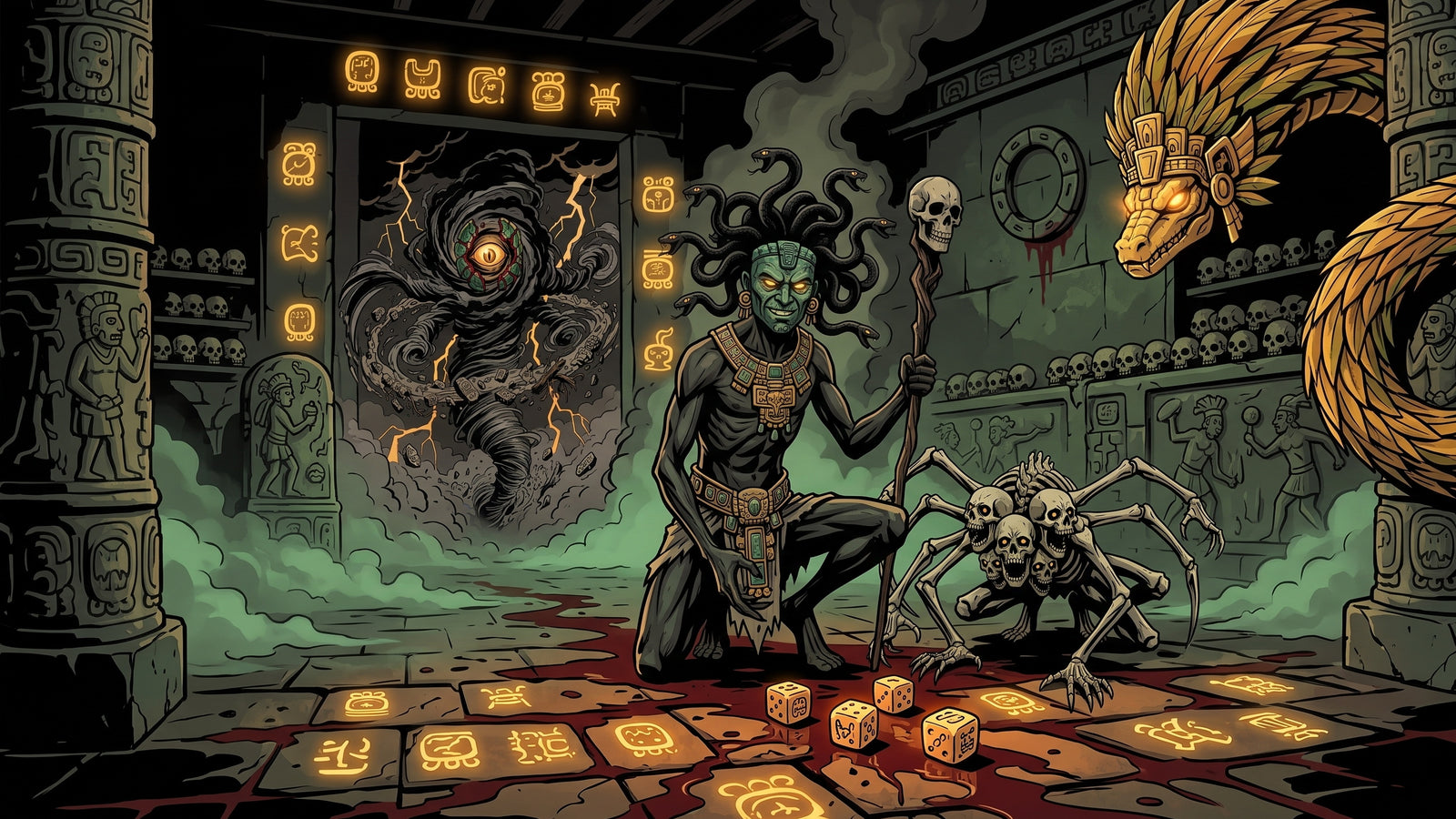
🌽 Corn — death is a tool
In the Popol Vuh the Hero Twins let the Lords of Death kill them — then came back, tricked the Lords into dying, and never revived them. The weak beat the strong by making death part of the plan.
Conscious Death: once per round Corn may remove its own god from the pyramid — and gain Battle Blood for it. The only faction that pays with itself and profits. No triangle: it chooses who to fight and who to trade with, every turn anew. In battle it doubles Blood: three points become six.
Corn doesn't build the best pyramid. It makes everyone else's fall faster. This faction exists only in the four-player game — three play the pure triangle: harder, faster, no joker.
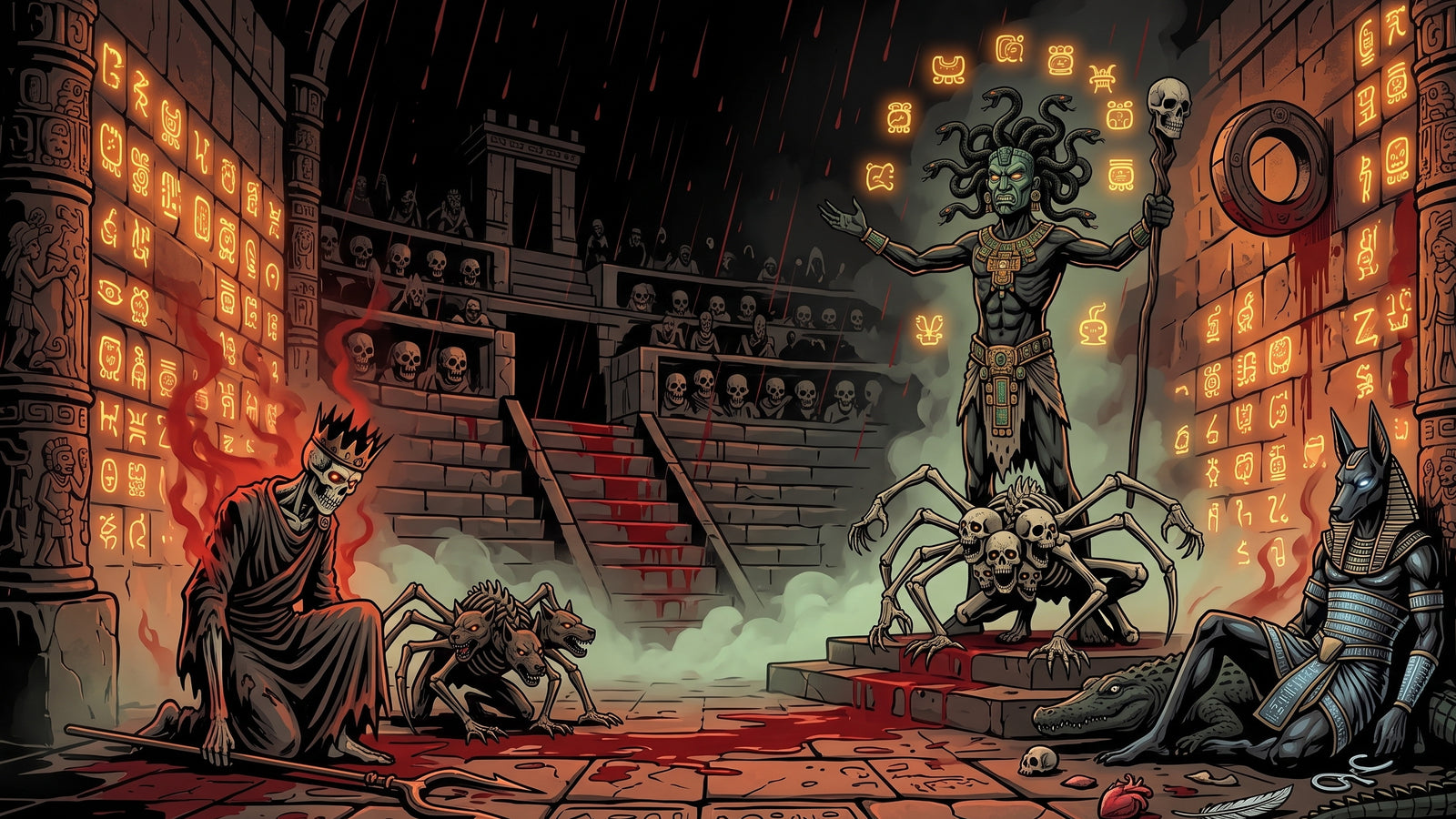
Everyone plants a bomb in the deck
Before the first turn each player shuffles one Chaos card of their mythology into the shared deck. Ragnarök. Enlil's Flood. Shiva's Dance. The Lords of Xibalba. You know they are there. You don't know when.
When a Chaos card surfaces, the game stops and a minigame begins: a dice duel, a solo trial against fate, a bluff of masks, a ball game. Win — your opponent pays. Lose — you do.
The strongest doesn't always win. Every game, a leader with an almost-finished pyramid draws the very card they planted twelve turns ago. You can't defuse the bomb — you can only not stand next to it when it goes off.
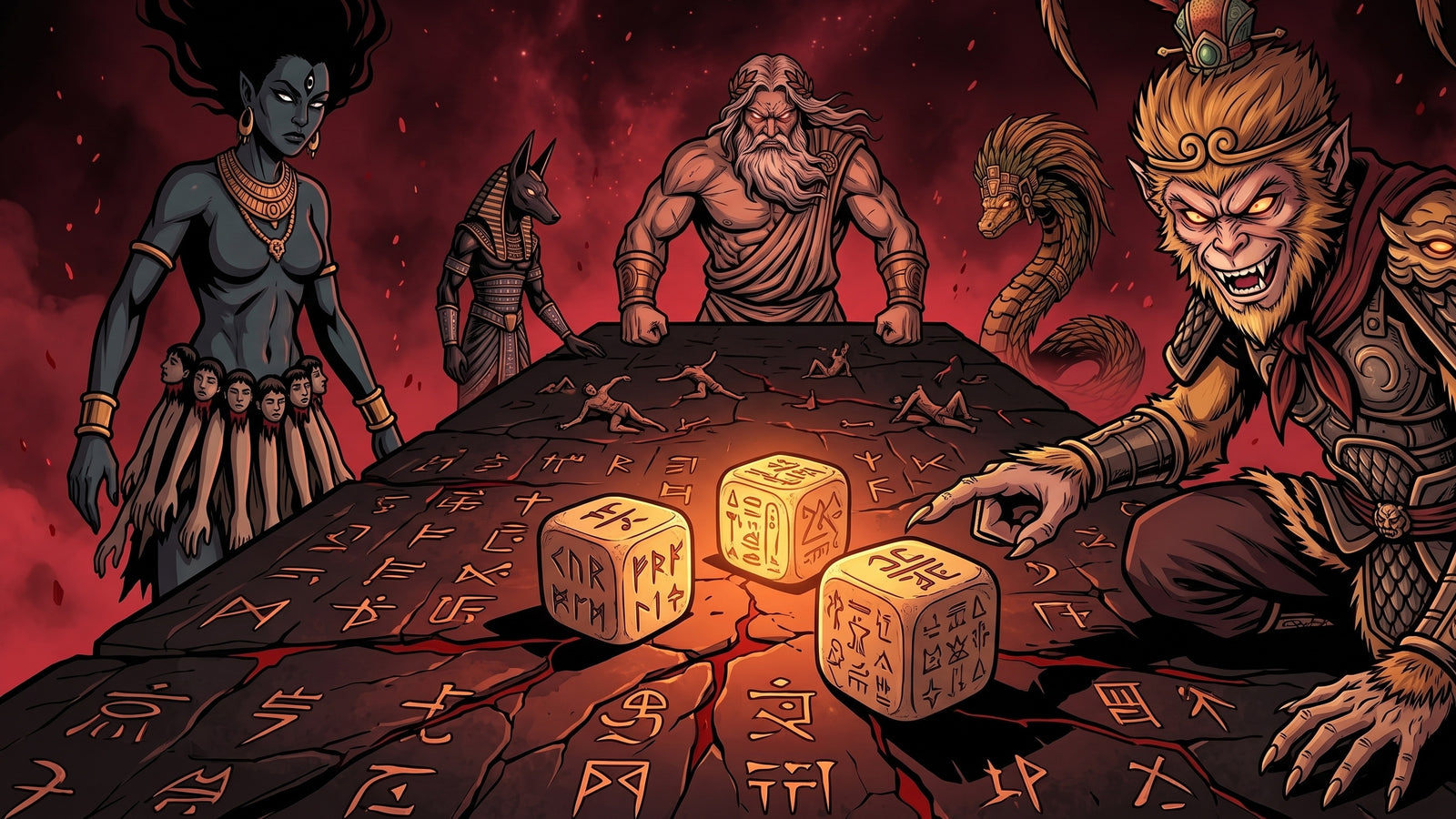
So does God play dice, or not?
You can calculate every trade. Win every war, gather all the Blood, build the pyramid perfectly, reach the finale first. Then roll three dice — and fall from the summit a second before victory.
PANTHEON is not about outsmarting your rivals. It is about the fact that even gods have to negotiate with chance — and that knowing when to risk matters more than knowing how to count.
Einstein said God doesn't play dice. Prove him wrong.
Find out about the Kickstarter launch →
“God does not play dice with the universe.”
“Einstein, stop telling God what to do.”
“God not only plays dice, He sometimes throws them where they cannot be seen.”
“When the gods created man, they allotted to him death, but life they retained in their own keeping.”
The Hero Twins let the Lords of Death kill them — and came back. Then they showed the Lords how to rise again. The Lords wished to try. The Twins did not revive them.
“Cattle die, kinsmen die, you yourself must die — but glory never dies.”
“O my heart, do not stand up against me as a witness.”
“As a man casts off worn-out garments and puts on new ones, so the soul casts off worn-out bodies.”
“I do not know whether I was a man dreaming I was a butterfly, or am now a butterfly dreaming I am a man.”
“Time is a child playing dice; the kingly power is a child's.”
“Alea iacta est.”
DVI DOLI
TWO FATES · Every technology opens two doors — one to light, one to darkness. Humanity always chooses both. Dvi Doli — the two fates of every invention.
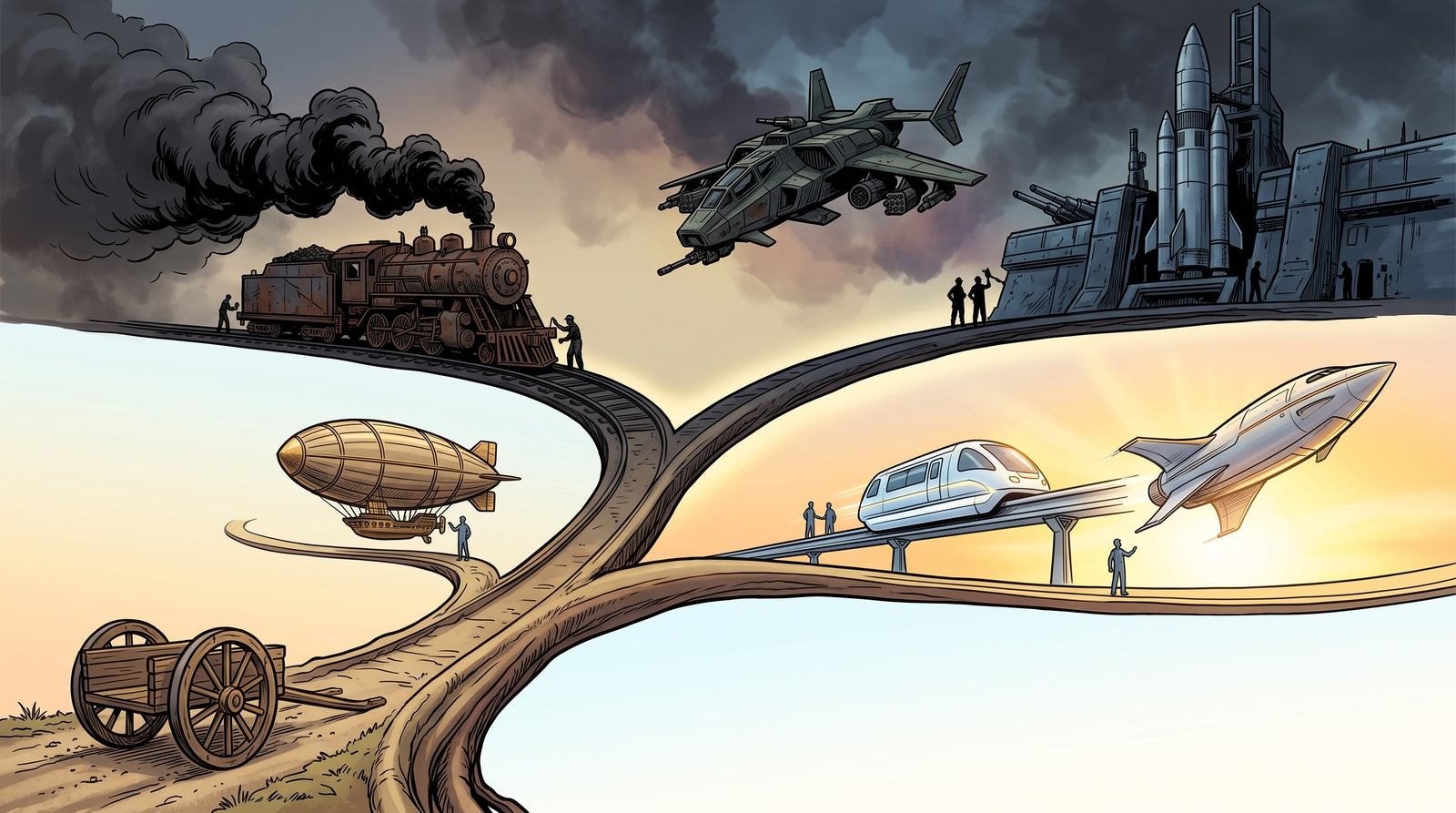
Every invention has two edges.
Fire cooked food — and burned cities. The wheel carried us home — and carried armies. No technology is born good or evil — it becomes what we make of it. In Dvi Doli you don't just build a civilization — you decide what every invention will mean.
Every card is a technology. Every technology is a choice.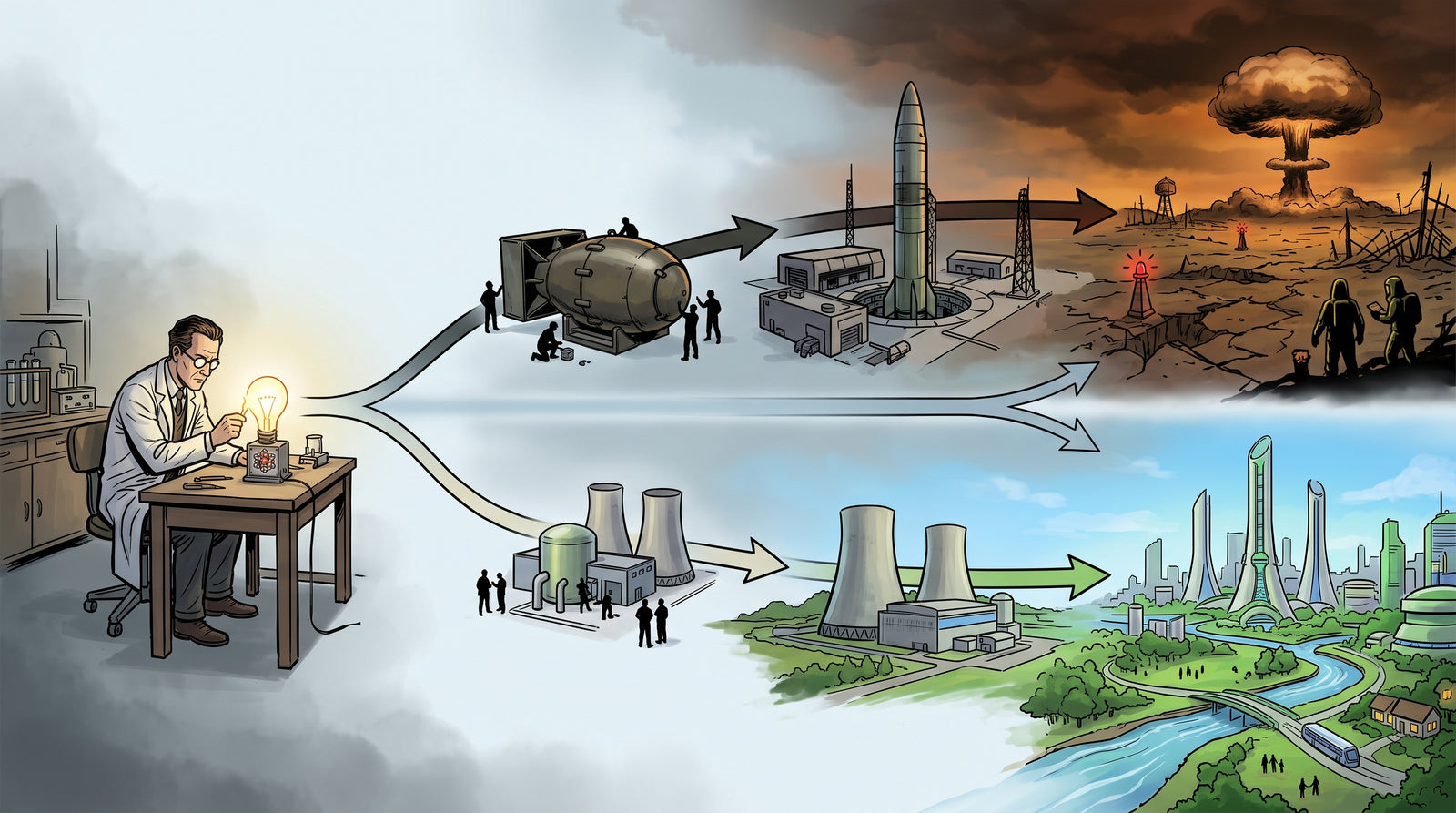
The same spark. Two different worlds.
One discovery splits the atom — and splits the future. The same knowledge becomes the bomb that ends a world, or the reactor that lights it. This is the heart of the game: one technology, two faces, and a chain of choices leading to paradise or ruin.
You choose which face of every invention gets built.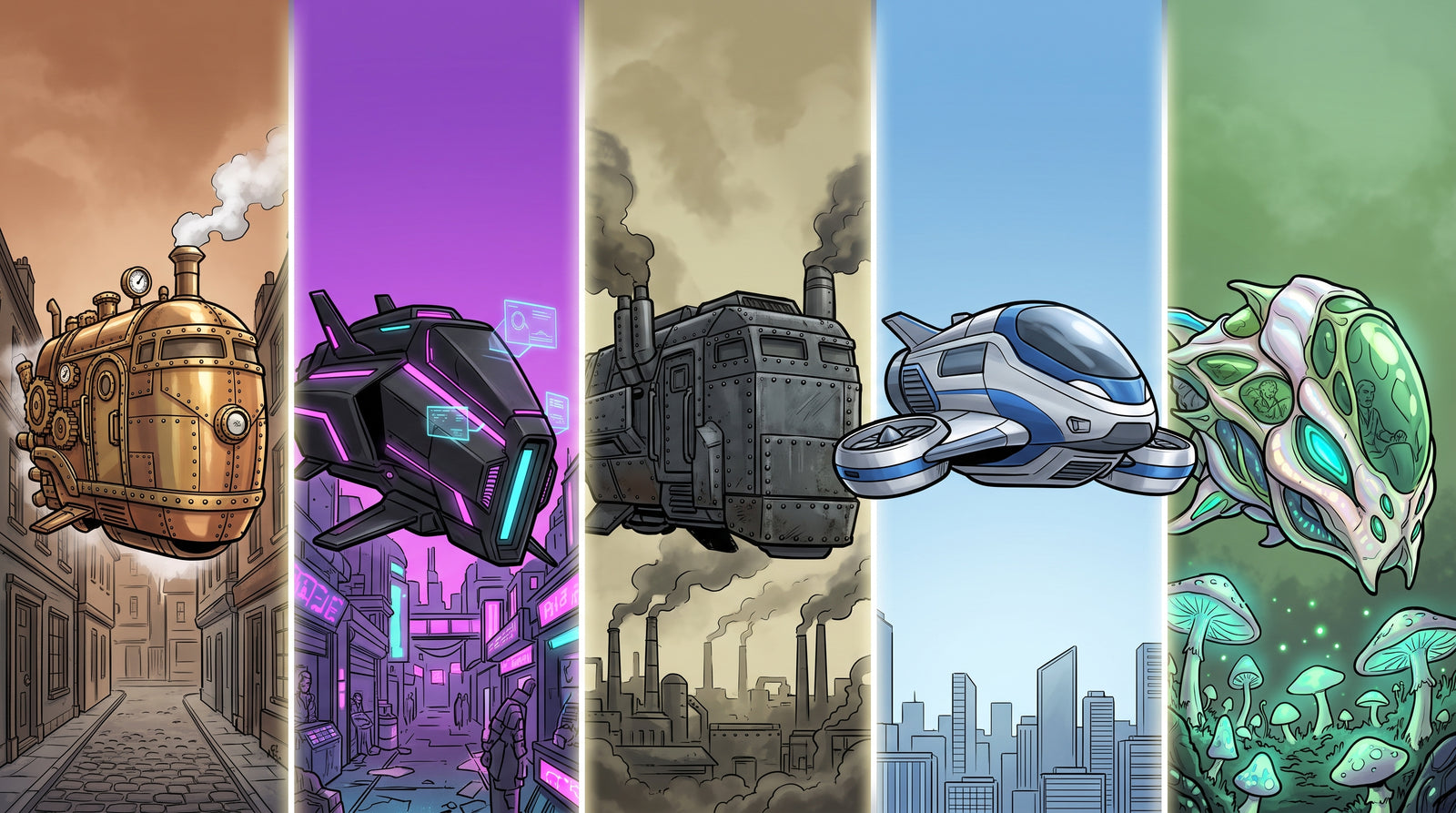
What you build decides the world you live in.
The same engine can wear five different faces. Steam and brass. Neon and data. Steel and diesel. Living gardens. Or the quiet reality of our own world. The technologies you favor don't just score points — they shape the genre of your civilization, its whole texture and fate.
Five genres. Each — an entirely different future.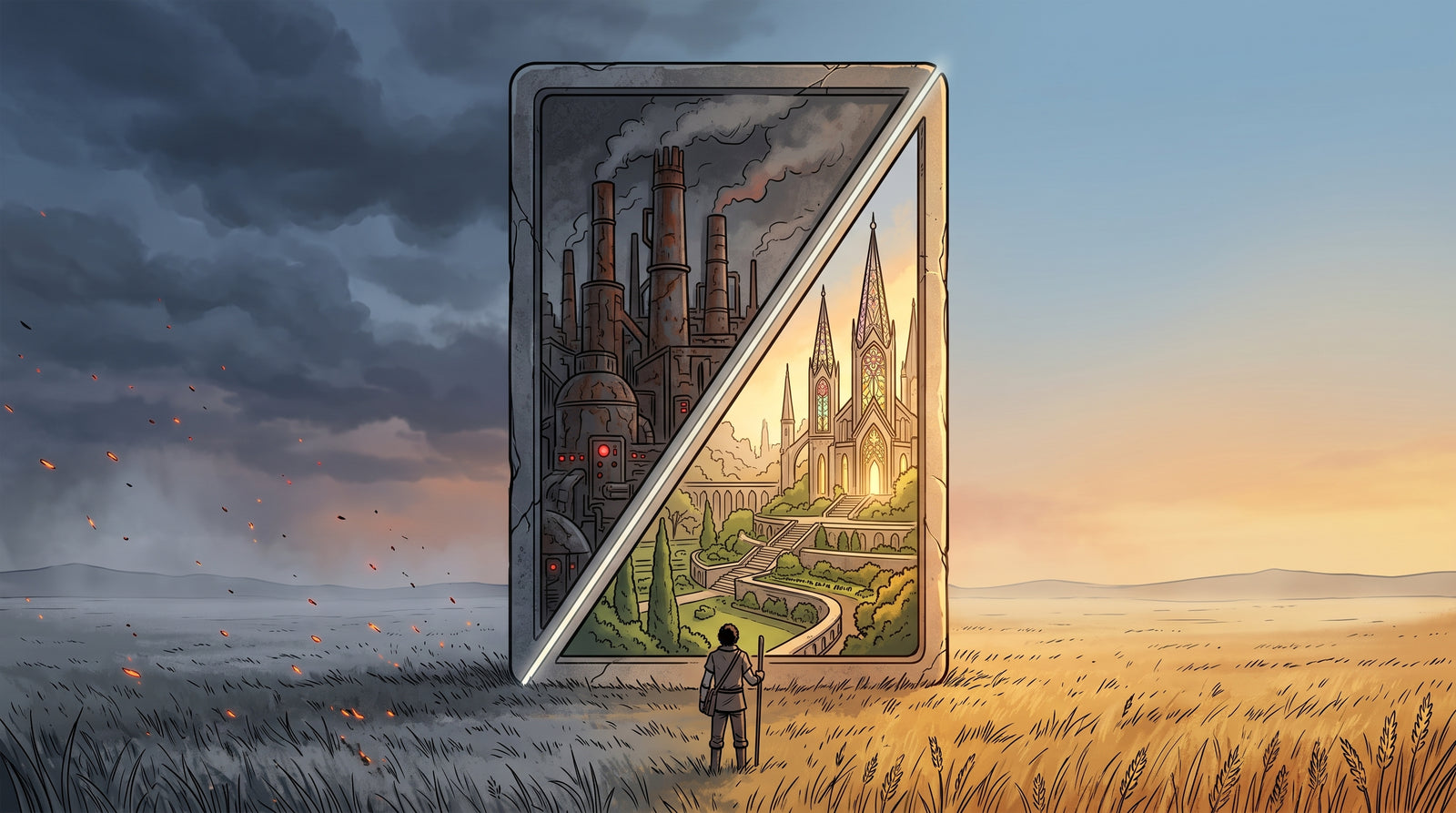
Aggression or Harmony. Choose — and rotate the card.
A diagonal splits every card into two lives. Play it as-is — Aggression: fast, free, one path forward, sometimes a strike at a rival. Rotate 180° — Harmony: costs a card from hand, but opens two paths and builds in peace. The rotation is the decision, made physically, right in your hand.
Aggression is free and narrow. Harmony costs more but opens wide.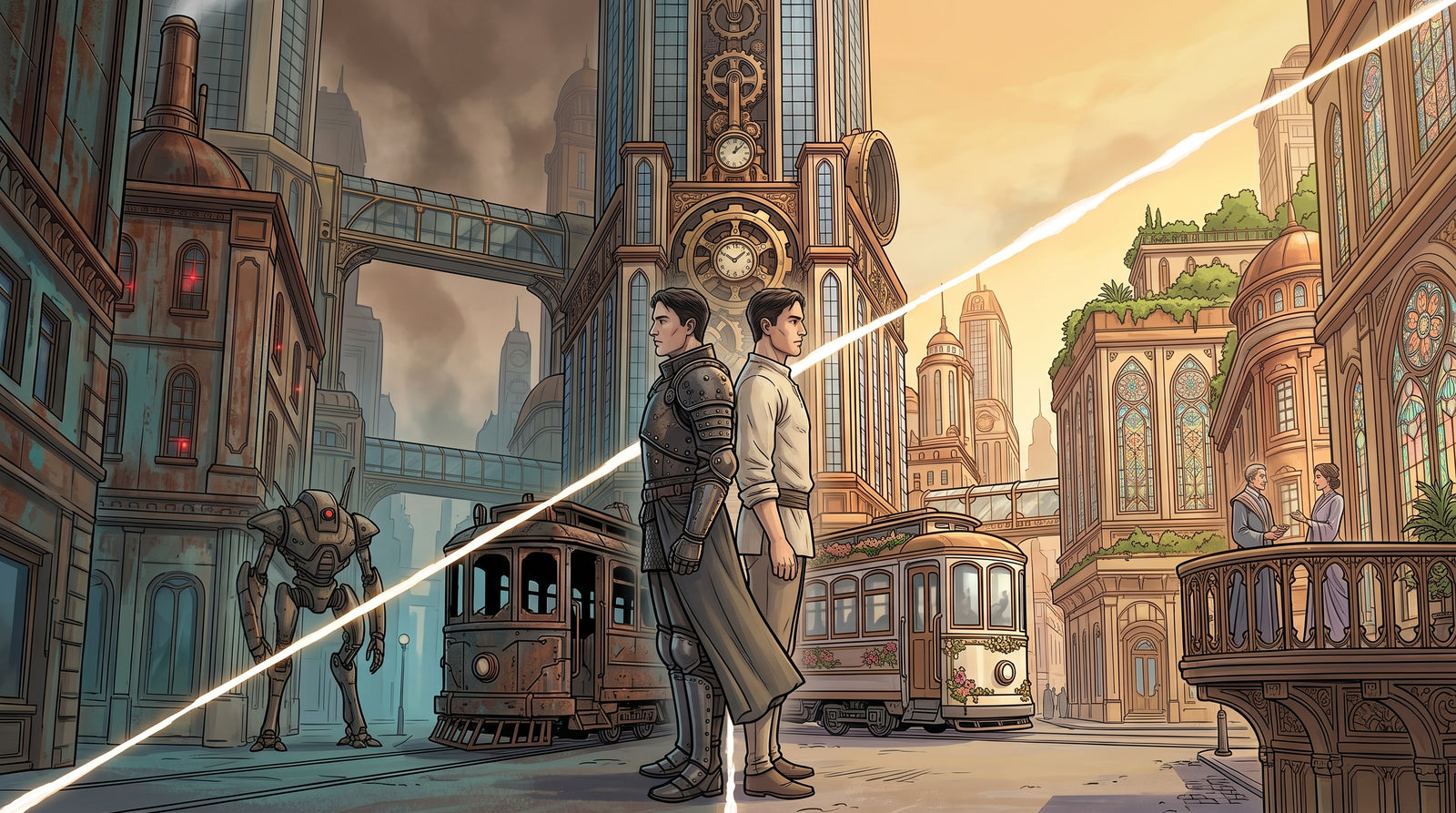
Your civilization has a shape. That shape is your strategy.
Every choice widens or narrows your growing pyramid. Aggression keeps it narrow and sharp; Harmony spreads it wide and open. By the final era, the physical shape of your tableau — tall and narrow or broad and sprawling — is the record of every decision you made. And it decides how you score.
The shape of your civilization is your strategy.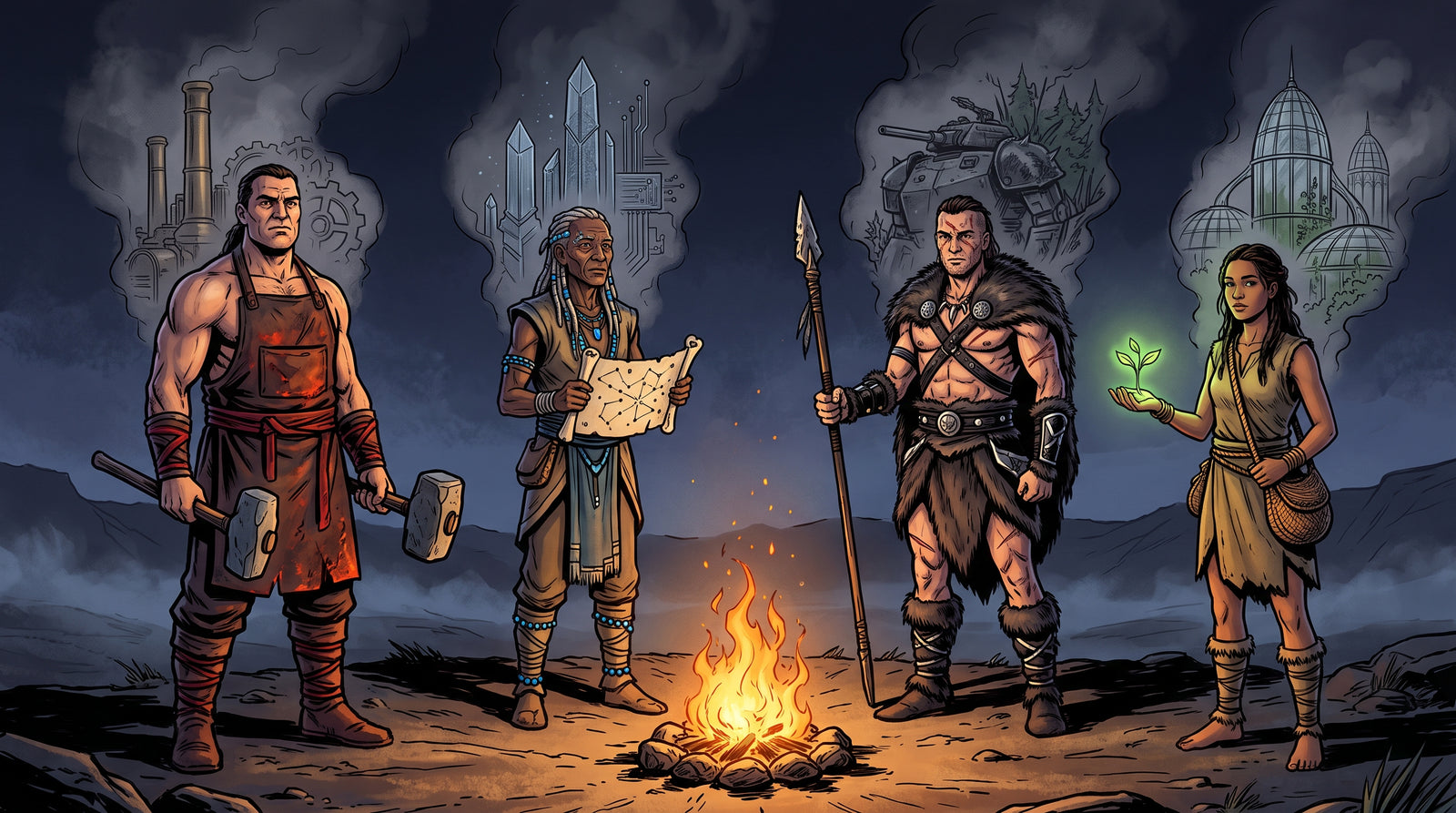
It all begins at a single campfire.
Before machines, before choices — four peoples around one flame. Smiths of fire, Sages of mind, Hunters of craft, Gatherers of life. Each opens different doors into the tech tree — three genres out of five. Your tribe is where your story begins. Not where it has to end.
Four factions. Four starting paths into the same 2200 years.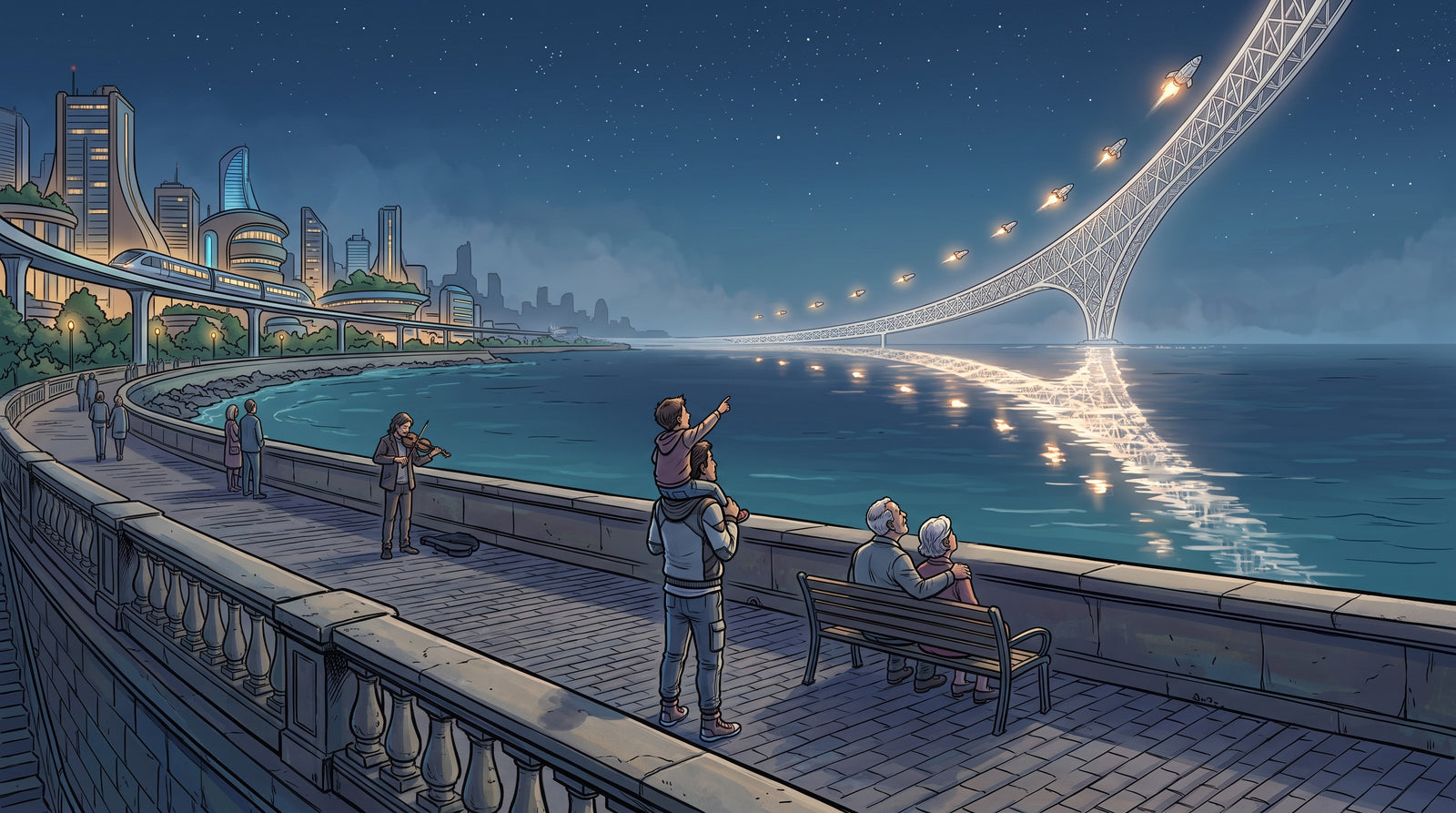
Build wisely — and this is where it leads.
A city that made the right choice century after century. Clean energy, an open sky, children looking up and seeing a bridge to the stars, not a wall. One of twenty-five endings your civilization can reach. The bright ones are the hardest to earn.
Utopia is a challenge, not the default outcome.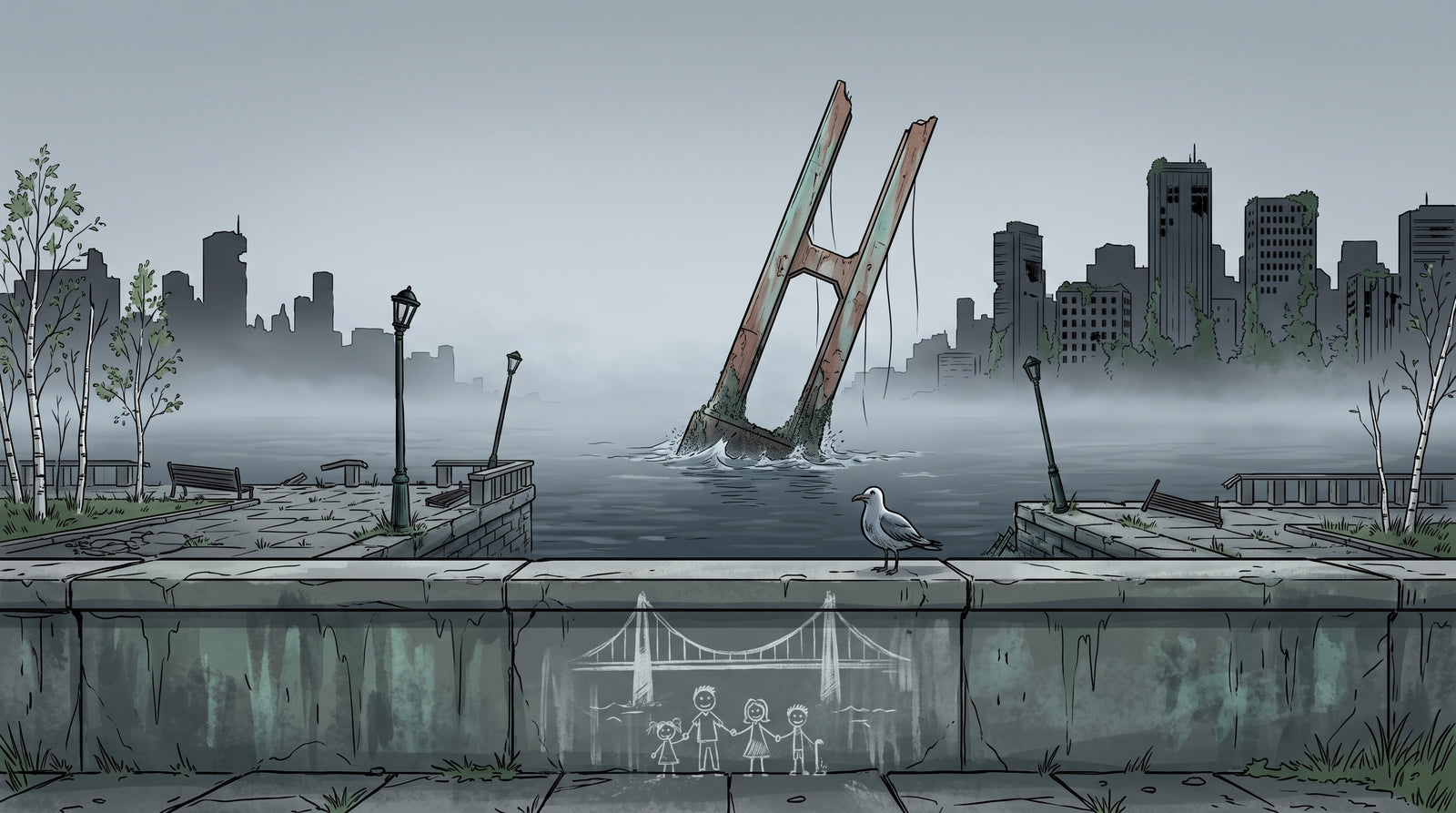
Or this is how it ends.
The same street. The same people. But the choices went another way — and now only a child's chalk drawing remains where a family once stood. Every game of Dvi Doli ends in one of twenty-five worlds. This is the one nobody wants to build.
The same choices. The world that never happened. Which one will you leave behind?“Man cannot change the world without changing himself.”
“Now I am become Death, the destroyer of worlds.”
“Reality is that which, when you stop believing in it, doesn't go away.”
“Any sufficiently advanced technology is indistinguishable from magic.”
“The saddest aspect of life right now is that science gathers knowledge faster than society gathers wisdom.”
“We are a way for the cosmos to know itself.”
“Earth is the cradle of humanity, but one cannot live in a cradle forever.”
“The unleashed power of the atom has changed everything save our modes of thinking, and we thus drift toward unparalleled catastrophe.”
Right now, you are reading this from a screen.
Somewhere nearby a show is playing. In your pocket — a device more powerful than every computer that sent people to the Moon. This is your reality. It feels like the only one possible — but it isn't.
Every technology that brought you here could have taken another road. The atom could have become ash instead of electricity. Networks could have become surveillance instead of freedom. Behind every world below stands the same chain of choices — simply made differently.
Five technologies. Two poles each. Pick a genre — and see who you could wake up as tomorrow.
Homo Stellaris
Reality · Utopia
Our own world — the one that made the right choices. No genre magic, no styling: just humanity that, century after century, didn't stumble. Clean energy, an open sky, a child pointing at a bridge to the stars. Look closer: the same cars, the same street lamps, the same laundry on balconies — nothing here is invented, everything is simply finished. The hardest world to reach in the game, because reality gives no discounts: every era demands the honest choice, and one bomb, one plague, one boot is enough to lose the sky. A promise we kept.
In game: Reality connectors dominant · polarity +9 and upSilent Earth
Reality · Dystopia
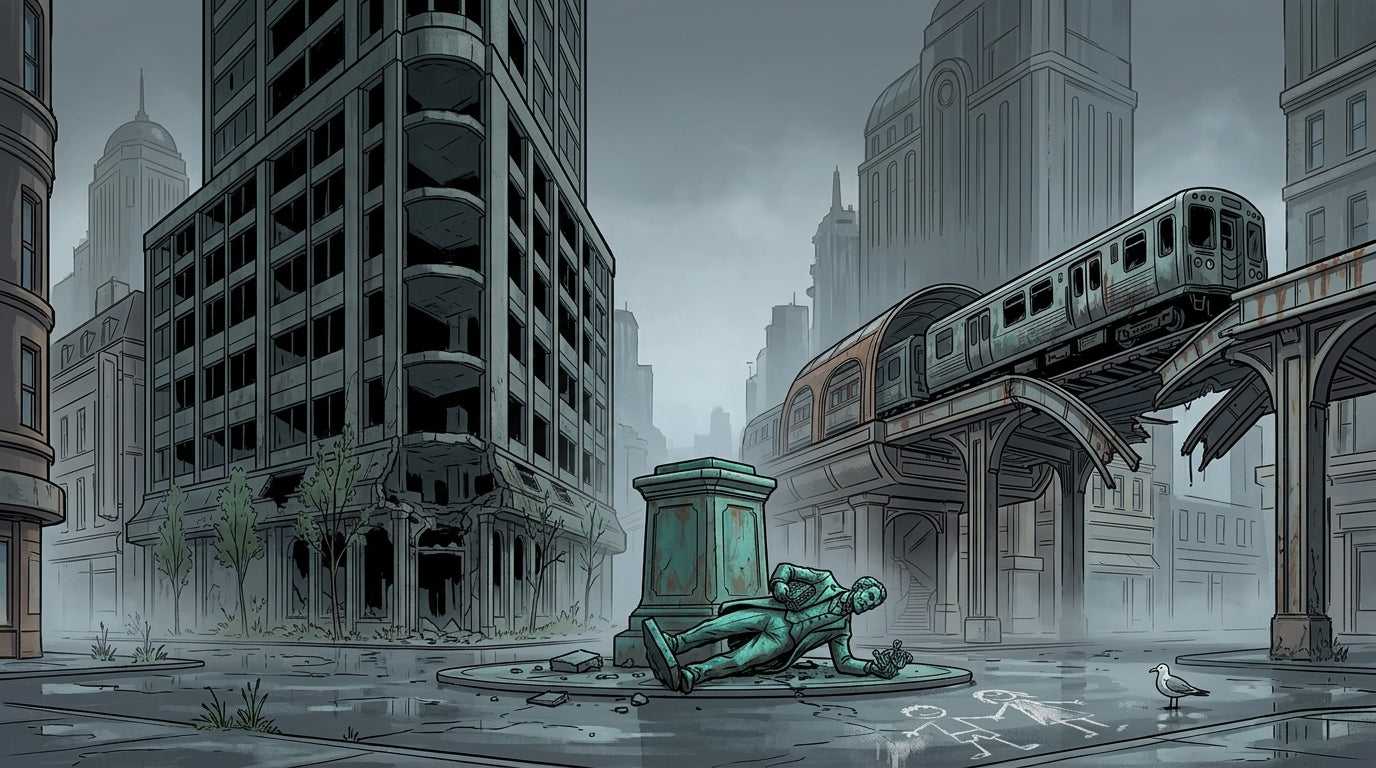
The same street, the same people — but the choices went differently, and now there is silence. An empty square, a fallen monument, a rusted train frozen forever. Where a family once stood, only a child's chalk drawing remains. Nothing burned and nothing exploded — that's the point: the world didn't end with a bang, it just stopped being chosen. Somewhere in its past there is an exact copy of your tableau, one card rotated the other way. Of all twenty-five endings this is the quietest — and the only one nobody built on purpose.
In game: polarity −5 and below — the civilization that never came to be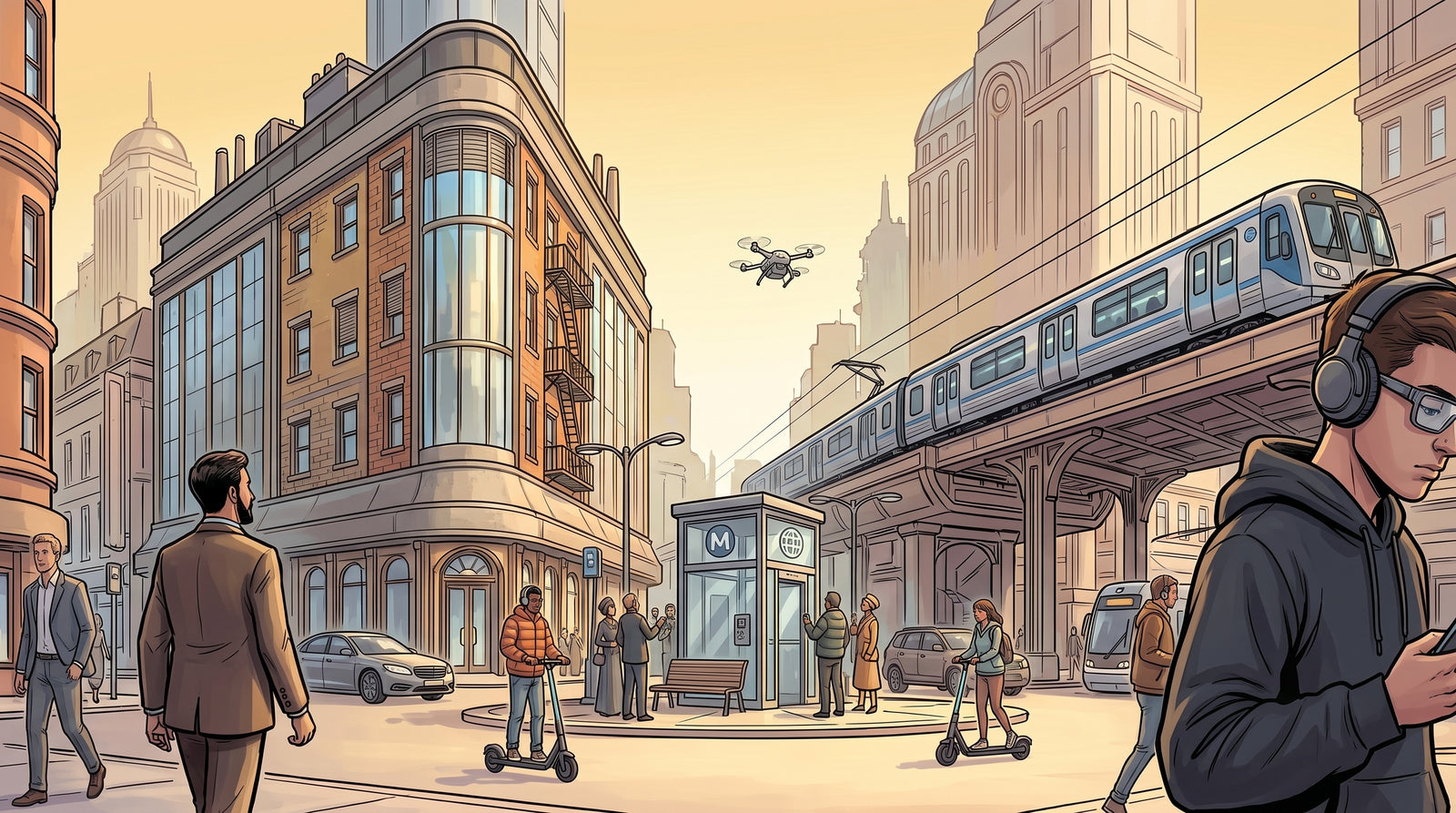
Gilded Horizon
Steampunk · Utopia
Steam and brass in the service of people. A city where every gear turns for shared progress, and the inventor is a hero honored with monuments. An age where the machine didn't replace the human — it elevated them. Airships carry mail, not bombs; the factory whistle means bread, not conscription. Children learn mechanics the way ours learn letters, and the patent office is the most crowded building in town. The brightest version of the industrial dream — the nineteenth century as it saw itself in its proudest moment, allowed for once to keep the promise.
In game: Light-Steam connectors dominant · polarity +9 and upSmoke & Chains
Steampunk · Dystopia
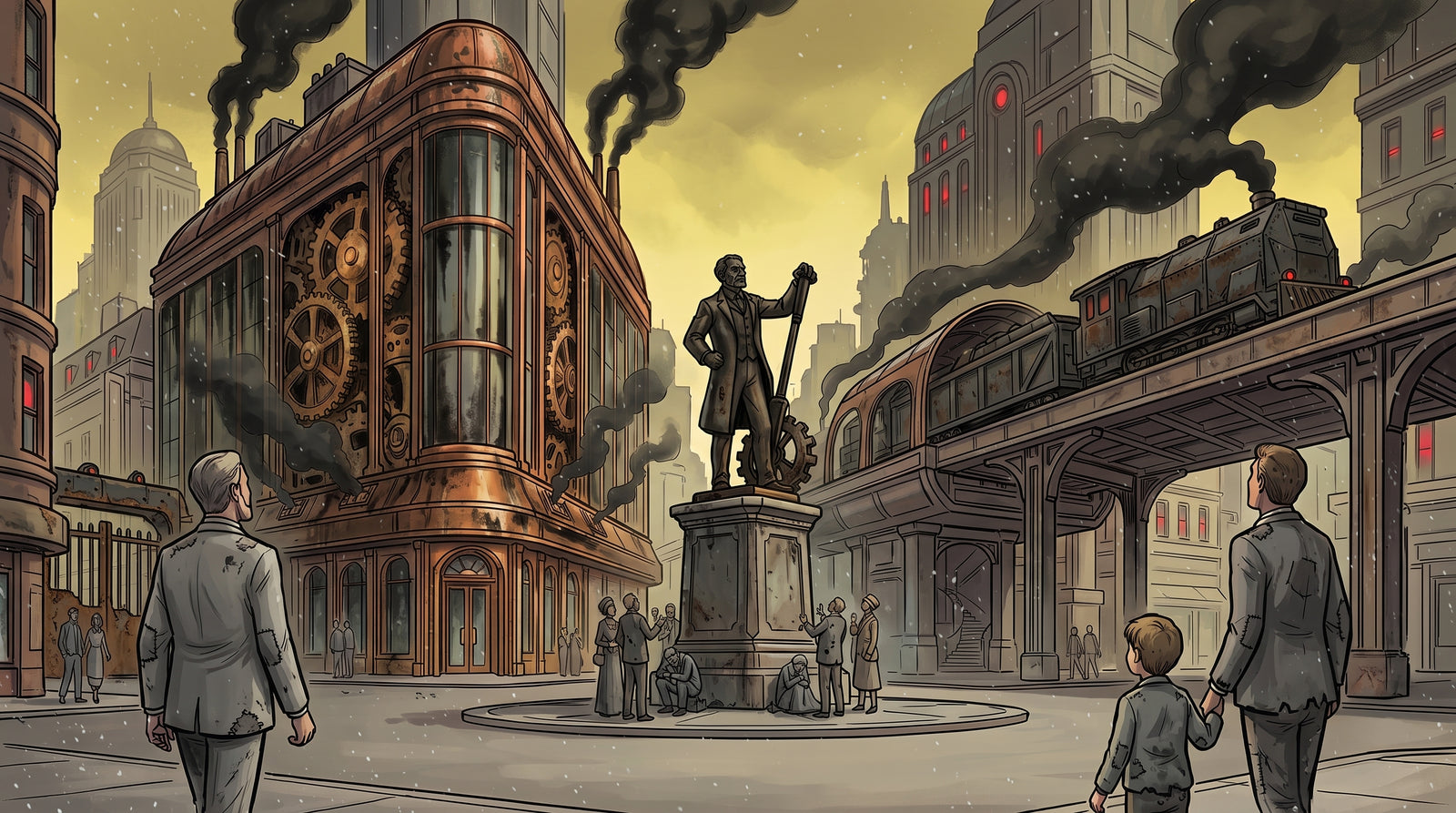
The same gleaming civilization of steam — rusted into oppression. The gears still turn, only now they grind people. The sky is yellow with sulfur, and on the pedestal stands not an inventor but a tyrant industrialist. The same engines, the same brass — count the rivets, they match — but every machine now has a quota and every quota has a body. Twelve-hour shifts, company scrip, soot in the lungs by thirty. Progress that devoured its own makers and called the smoke prosperity.
In game: Shadow-Steam connectors dominant · polarity −5 and below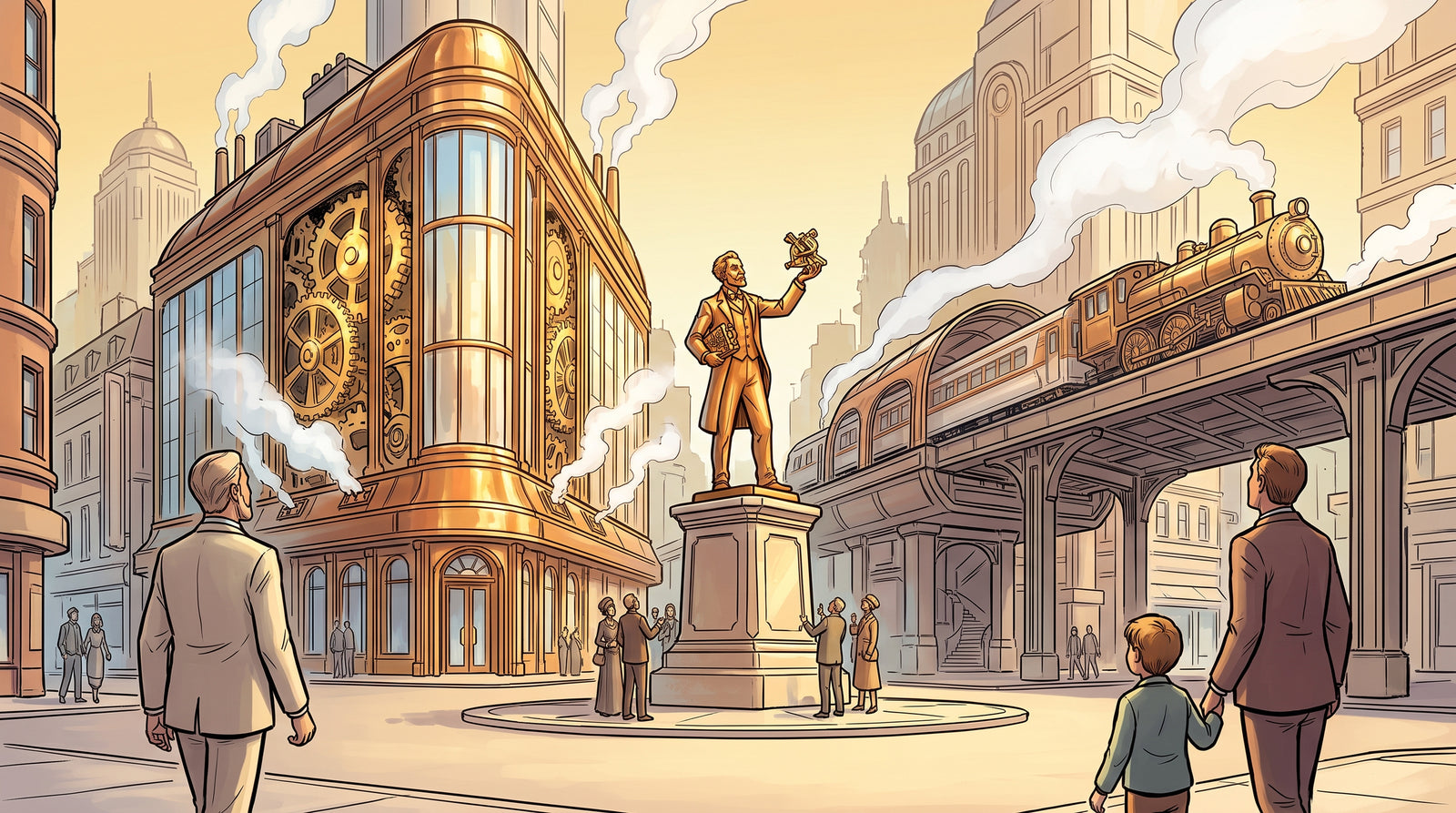
Cloud Society
Cyberpunk · Utopia
Information became free — and it freed everyone. Networks connect instead of watching; knowledge is as open as air. The city glows not with ads but with a tree of a million voices. Every screen answers, none of them sells; the network remembers everything and blackmails no one. A child in any district has the same library as a minister — and the minister can be reached by anyone. Technology here is a common good, not a chain: the same cables, the same code as in the darkest timeline — pointed the other way.
In game: Light-Cyber connectors dominant · polarity +9 and upNeon Slum
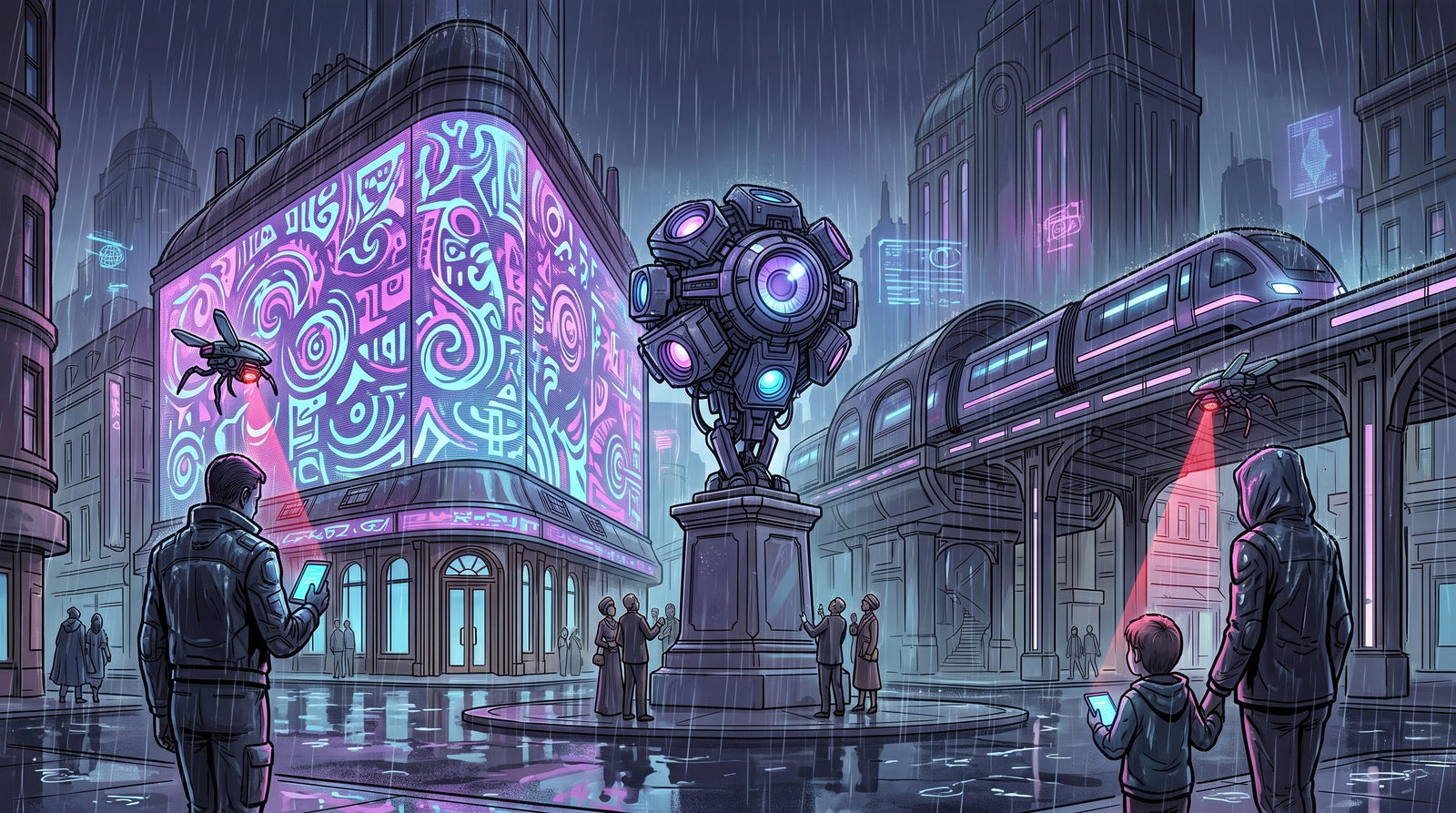
Cyberpunk · Dystopia
The same networks — but now they look back. Rain, neon, wet asphalt and an eye of surveillance on every corner. You are never alone — and that is exactly why you are so lonely. Every step is logged, every purchase scored, every friendship priced; the advertisement knows your name and the landlord knows your dreams. Above the slum, towers you will never enter sell privacy as a luxury good. A future where everything is connected and no one is trusted — built from exactly the same inventions as the free city, one choice apart.
In game: Shadow-Cyber connectors dominant · polarity −5 and below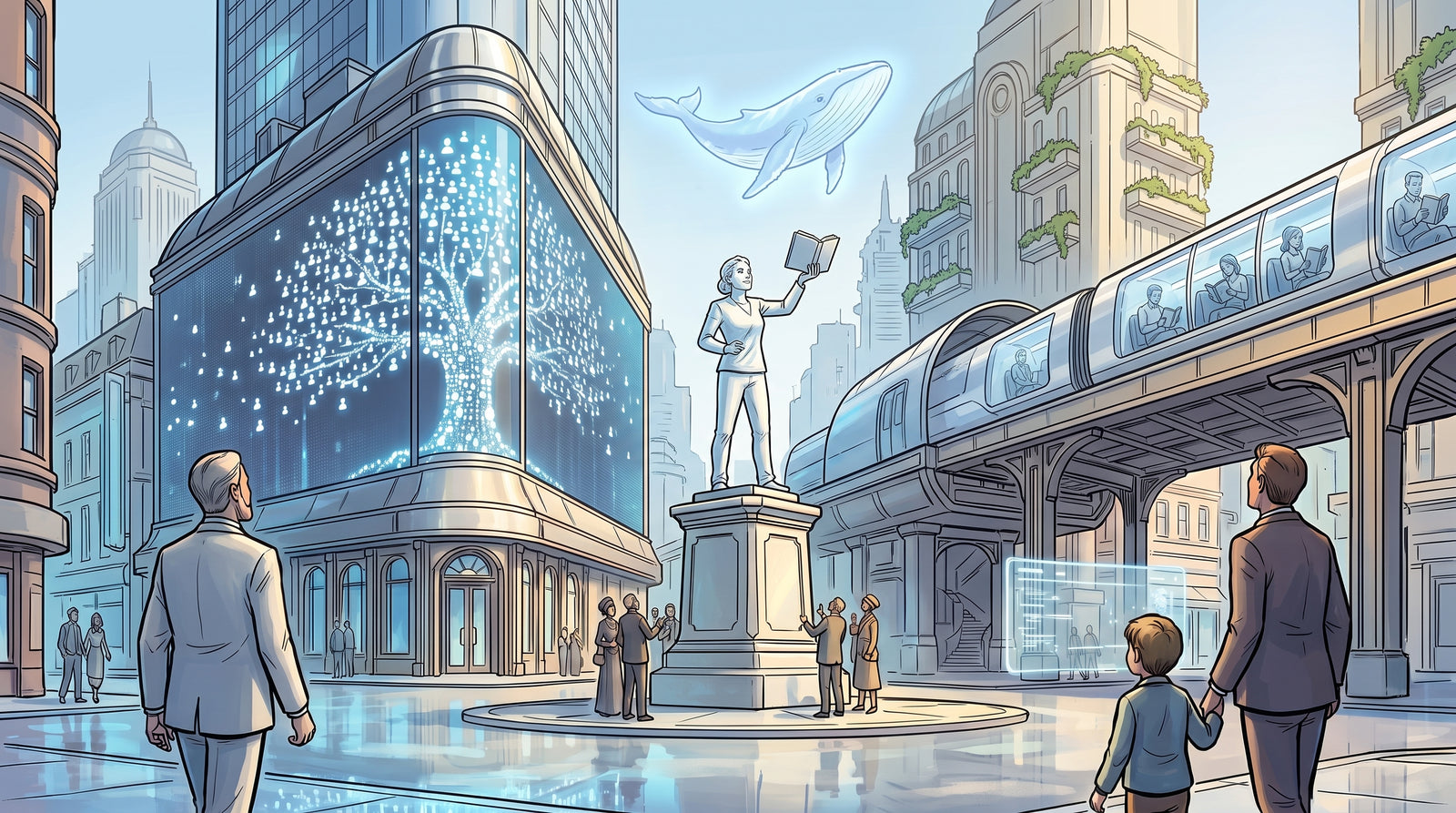
United Federation
Dieselpunk · Utopia
Colossal industrial might — aimed at building, not war. Giant diesel liners, airships, monumental order. Strength that doesn't oppress but holds the world together. The parade ground is a harvest fair; the searchlights guide ships home instead of hunting them. Steel enough to armor a continent — spent on bridges, dams and schools with columns. It is a stern world, yes: uniforms, schedules, oaths — but the discipline serves the people who keep it. Power in service — not against.
In game: Light-Diesel connectors dominant · polarity +9 and upWar Machine
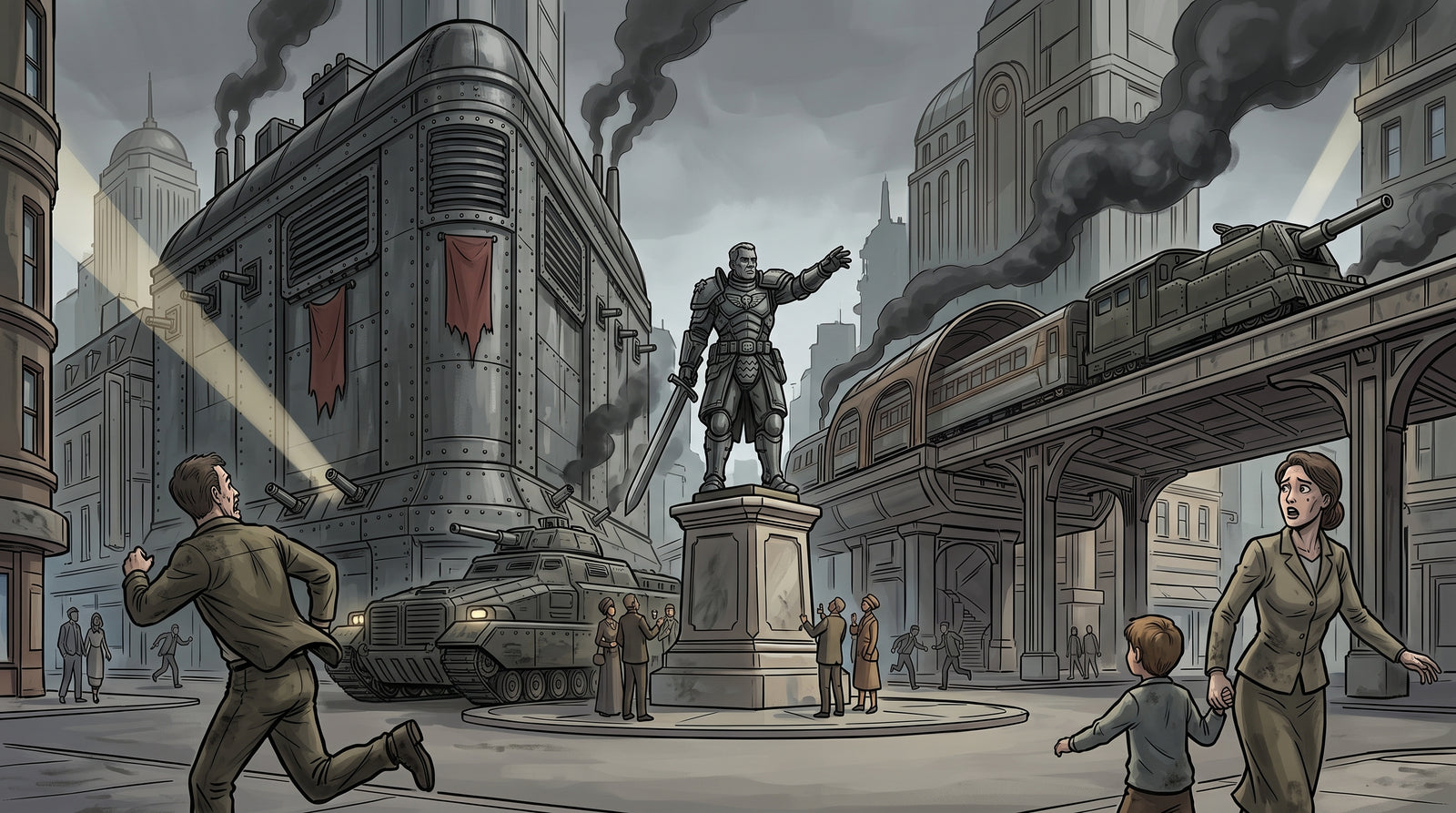
Dieselpunk · Dystopia
Imagine the totalitarian superpower didn't fall but won — and lived to 2200. The same steel might, but now it is tanks, searchlights and marching boots. A barracks-city where a human is fuel for the machine. The bridges became pontoons, the dams became borders, the schools teach one subject — obedience. Nobody remembers what the war is for; the war is the schedule, the anthem, the ration card. Diesel that drinks blood — and the tank factories never close, because stopping would mean asking why.
In game: Shadow-Diesel connectors dominant · polarity −5 and below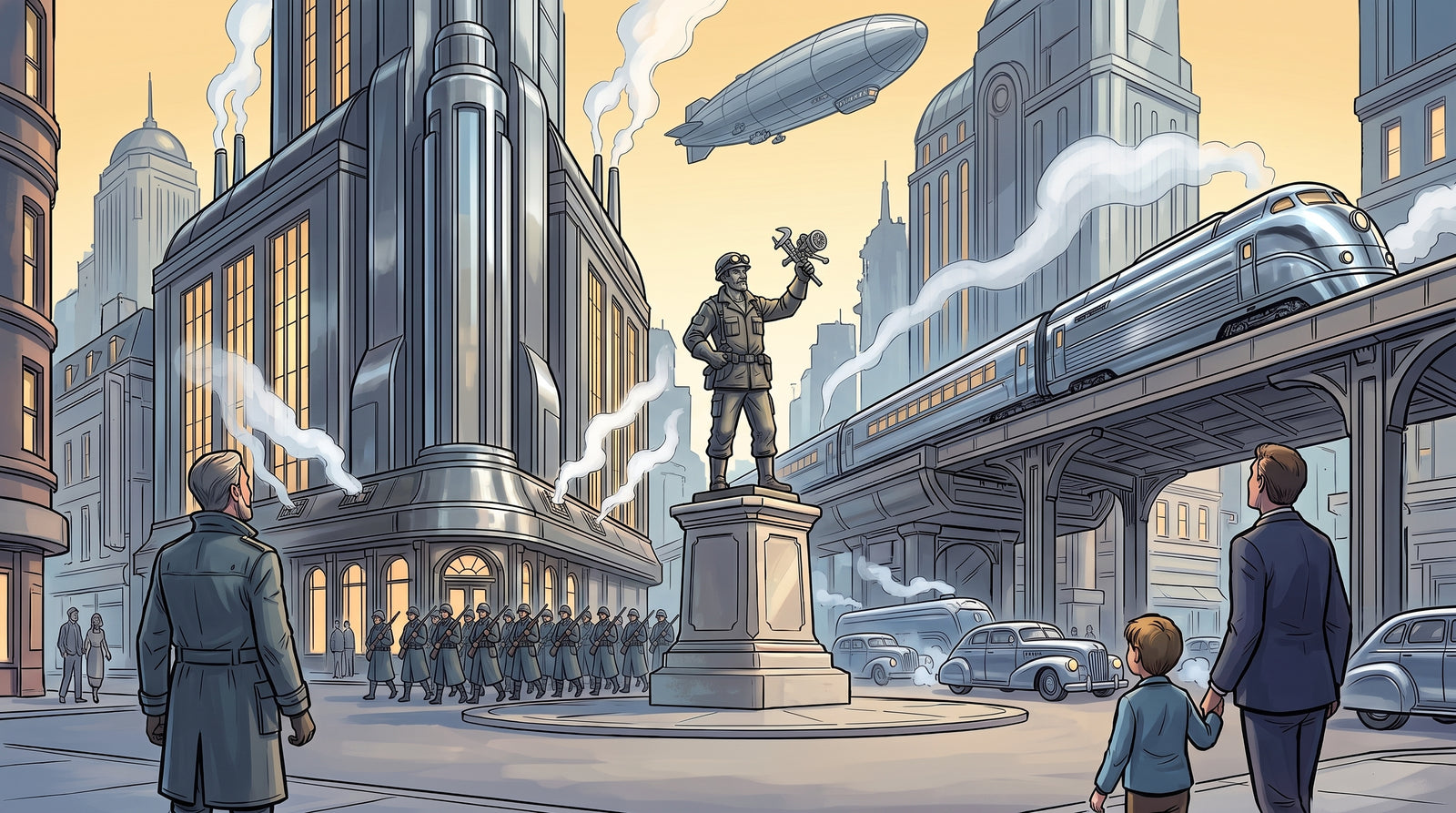
Green Eden
Biopunk · Utopia
Humanity mastered life itself — and made it beautiful. Buildings grow like trees, bodies are healed, disease is defeated, and someone already flies on wings of their own. Not a city with gardens — a breathing city-organism: walls that heal their own cracks, streets that bloom by season, water cleaned by the riverbed itself. Old age became a choice, hunger became history. The boldest bet in the game — life as a work of art, signed by everyone who dared to make it.
In game: Light-Bio connectors dominant · polarity +9 and upPlague Hive
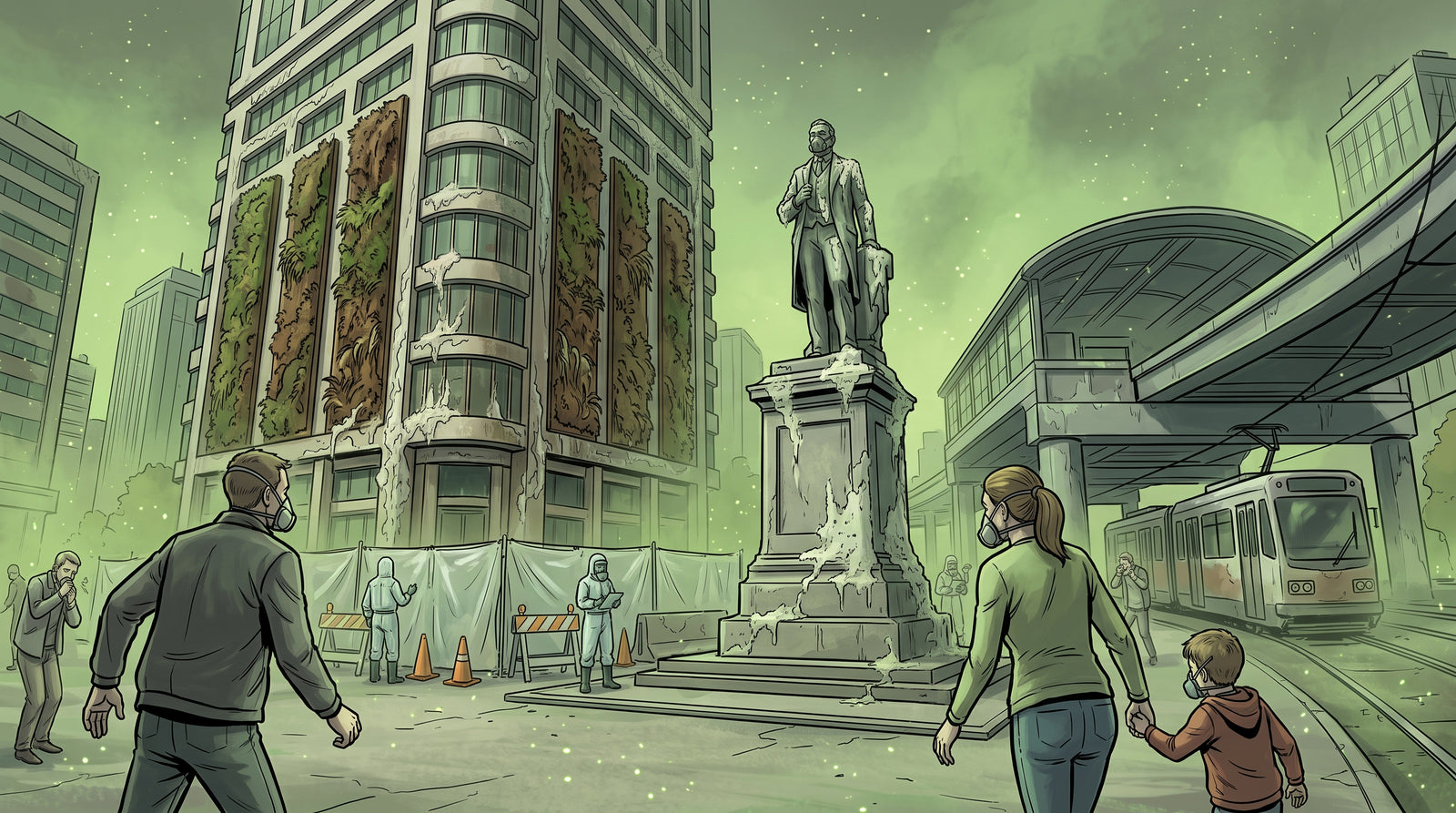
Biopunk · Dystopia
The same power over life — slipped out of our hands. What was grown as paradise now rots and infects. The living buildings are sick, the air is full of spores, and behind the quarantine line stand people in hazmat suits. The garden didn't die — worse, it kept growing: walls that heal now scar over the windows, the blooming streets bloom into lungs. Every beautiful thing from the bright timeline is still here, feverish and hungry. We woke something we cannot control — and it likes us.
In game: Shadow-Bio connectors dominant · polarity −5 and below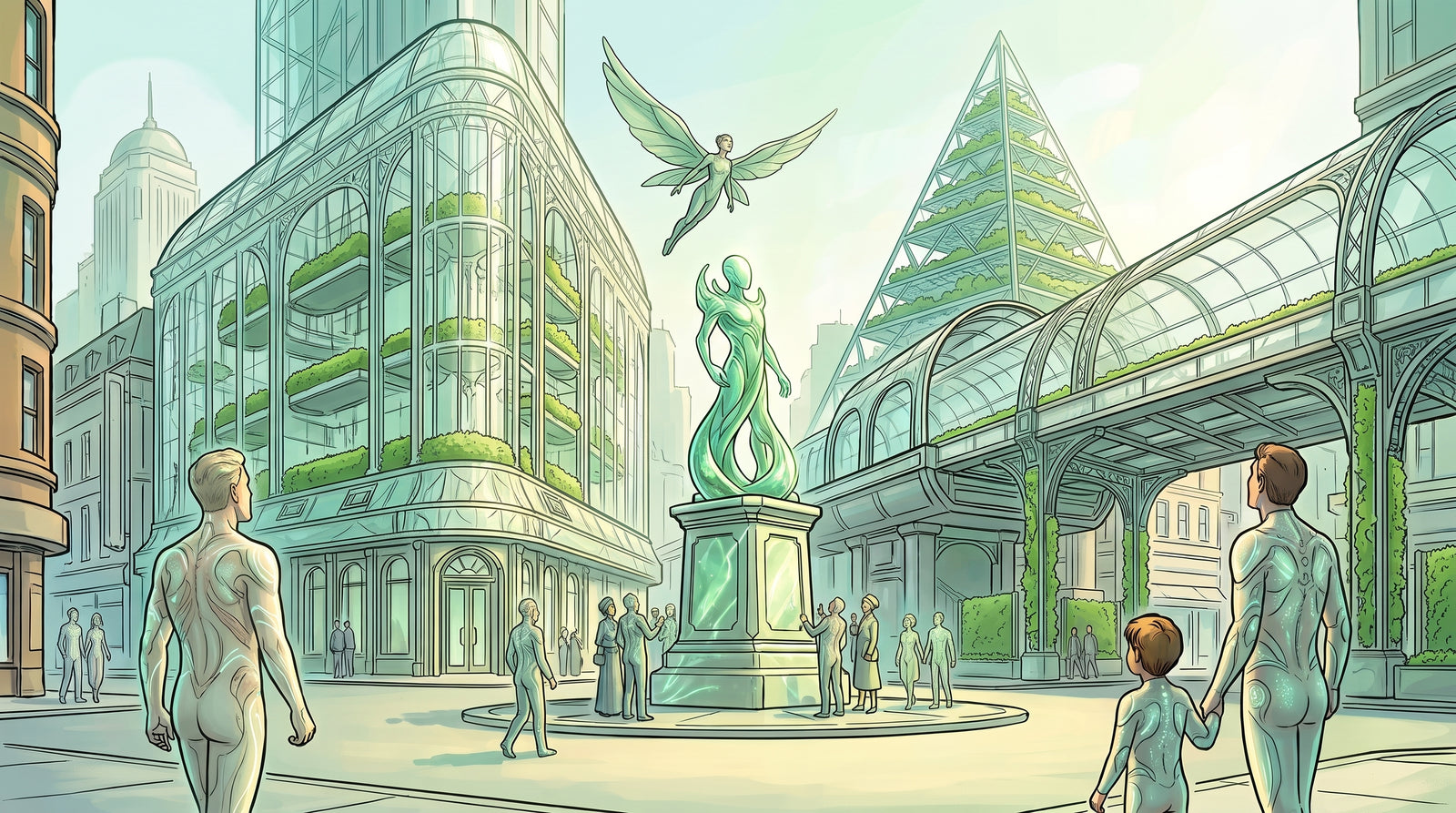
For publishers and retailers
Licensing, localization and wholesale terms — write to us and we'll send terms and pricing.
Retailers & distributors
Wholesale terms, B2B pricing and a marketing kit for your store.
Write to us →An engineering hobby turned studio

Andrii Gurskyi
By day I run an engineering bureau — industrial design, mechanical calculations, multitools of our own invention. By night, board games. 7ERAS grew from a habit of building systems — and a love of history.
Every card, every number on it comes from the same place our engineering does: calculated, tested, rebuilt, tested again.