
PANTHEON: Czy bogowie grają w kości?
Siedem mitologii. Czterdzieści dwie karty bogów. Jeden cel — zostać bogiem ponad bogami.
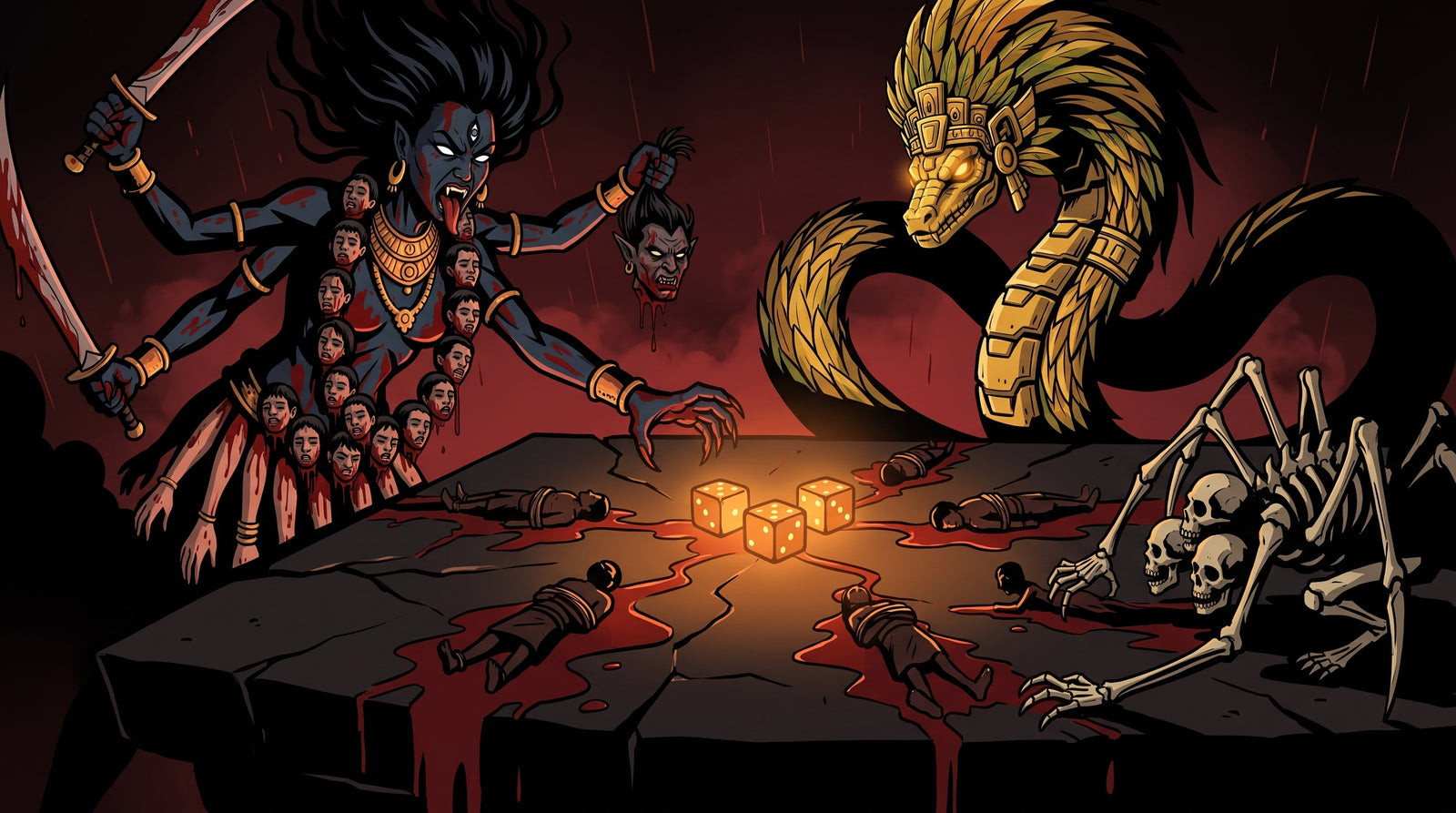
Czy bogowie grają w kości?
Einstein powiedział, że Bóg nie gra w kości. Po prostu nigdy nie widział tego stołu. Siedem mitologii, czterdzieści dwie karty bogów, jeden cel — zostać bogiem ponad bogami.
Nie ratują światów i nie walczą o terytoria. Grają według reguł, które sami napisali, o stawkę, którą sami wyznaczyli. Na stole leżą śmiertelnicy. W powietrzu wiszą kości — i dopóki nie spadną, nikt nie wie, jak to się skończy. Nawet bogowie.
PANTHEON to asymetryczna strategia karciana, w której każda frakcja gra według własnej filozofii śmierci. Nie tylko rywalizujesz o punkty — udowadniasz, że twój sposób patrzenia na śmierć jest tym właściwym.
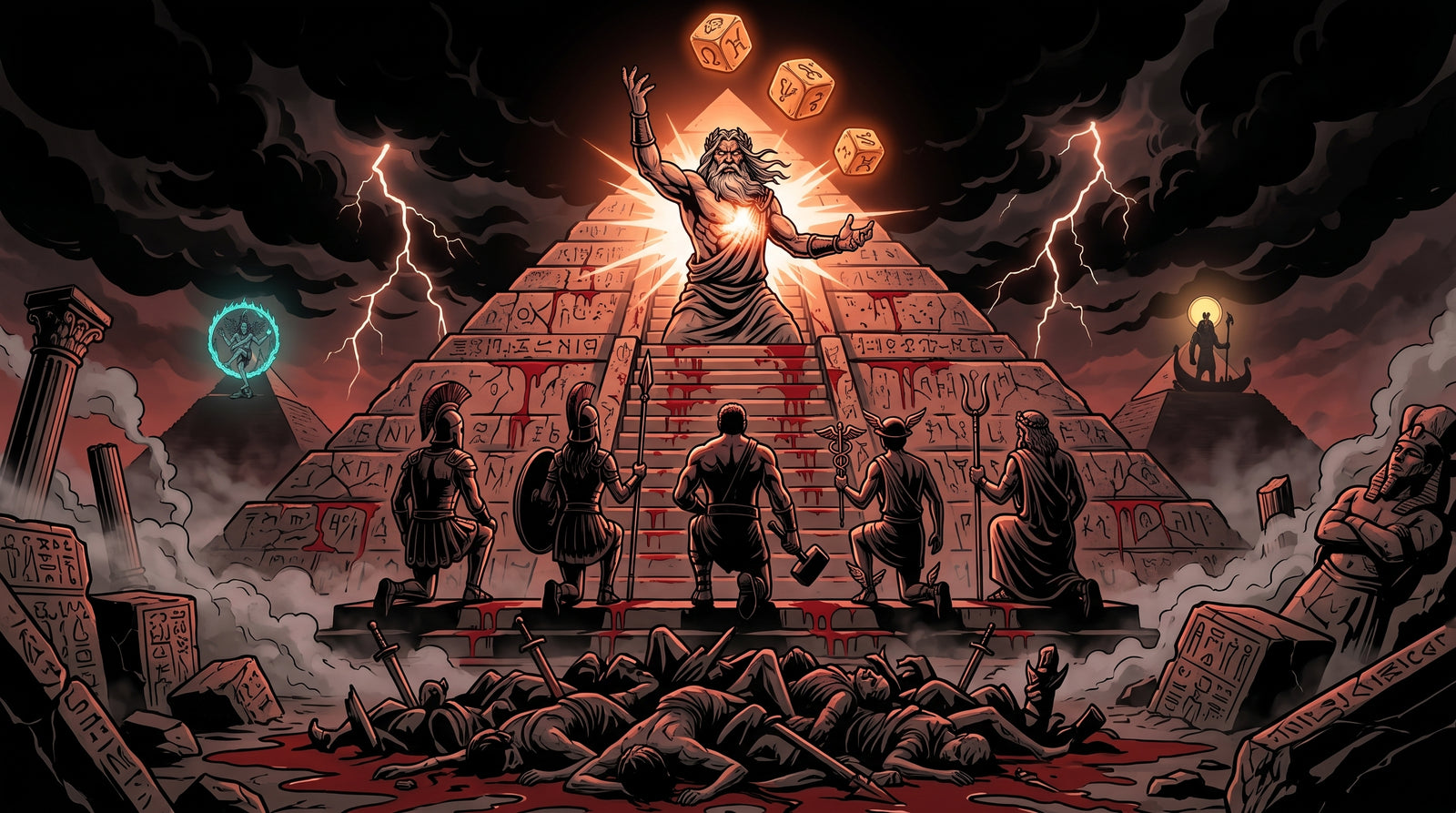
Zbuduj piramidę. Rzuć wyzwanie losowi.
Twoja frakcja to sześciu bogów na ręce. Aby wygrać, ustaw ich wszystkich w Piramidzie Panteonu — trzech w Fundamencie, dwóch w Filarach, jednego na Szczycie — i przeżyj Apoteozę.
Każda budowa to rzut trzema kośćmi przeciw progowi: Fundament ≥9, Filary ≥10, Szczyt ≥11 — a każdy stojący już bóg daje +1 do następnego rzutu. Piramida sama pomaga sobie rosnąć.
Gdy stoi cała szóstka, nadchodzi Apoteoza — ostatni rzut przeciw 12. Cichy pacyfista dochodzi do tego rzutu z szansą 38%. Weteran z czterema żetonami Krwi Bitewnej — 84%. Boskość nie jest dana tym, którzy unikali krwi.
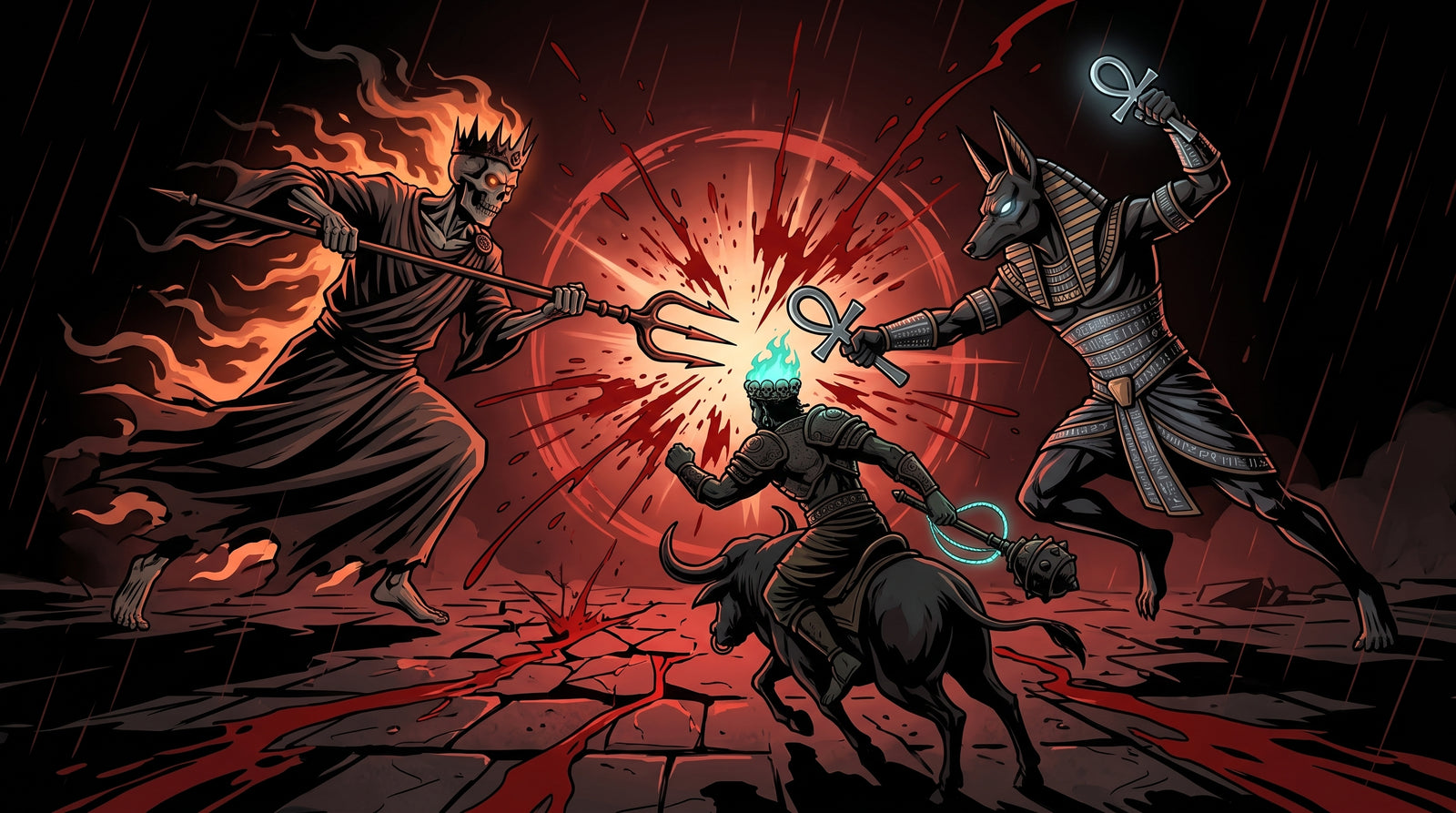
Trójkąt bez wyjścia
Ogień kruszy Kamień. Kamień blokuje Wodę. Woda gasi Ogień. Nie wybierasz wroga — trójkąt decyduje za ciebie, na całą partię.
Co turę musisz zrobić jedno z dwojga. WOJNA — zaatakuj boga w piramidzie wroga: obaj odsłaniacie do trzech kart zasobów, wyższa suma wygrywa, zwycięzca bierze Bojową Krew. HANDEL — wymień karty zakryte ze stałym partnerem, a obaj dobieracie bonusową kartę pokoju.
Pokój daje zasoby. Wojna daje jedyne, co czyni zwycięstwo realnym. Dyplomacji tu nie ma — jest tylko wybór, jak daleko zajść w tym, co już przesądzone.
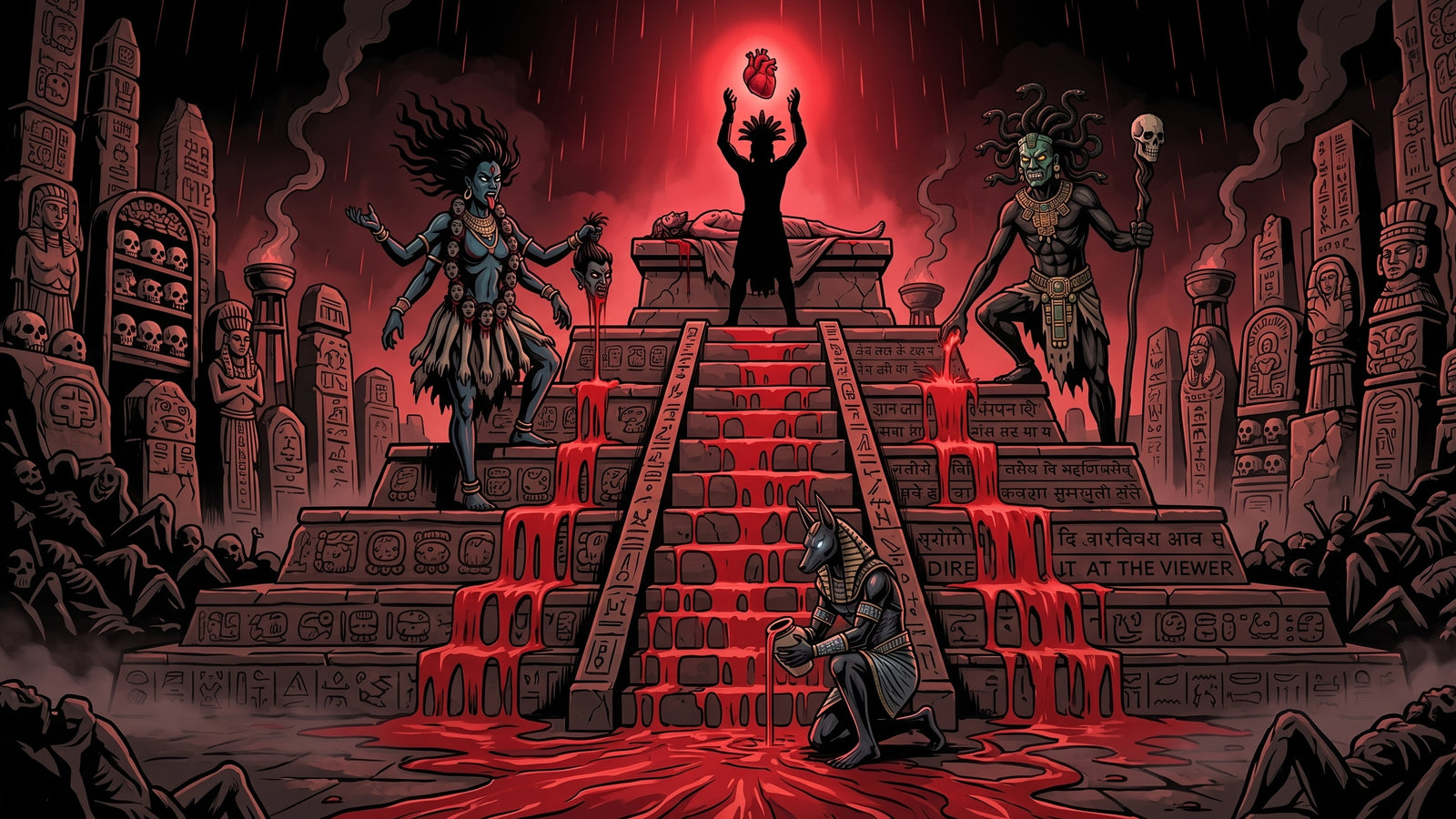
Krew to jedyna waluta, która ma wagę
W talii są cztery zasoby: Płomień, Kamień, Woda — i Krew. Trzy pierwsze to budulec. Krew to władza, a jest jej tylko osiem kart. Dla wszystkich.
Krew jest najsilniejsza w walce. Krew jest obowiązkowa, by postawić boga na Szczycie. A Bojowa Krew — osiem żetonów, które nigdy nie spłoną — to jedyne, co czyni Apoteozę osiągalną.
Bogowie nie produkują krwi. Przelewają ją śmiertelnicy. Cała ekonomia opiera się na tym, że na dole ktoś umiera — na wojnach, na ołtarzach, na rytualnych boiskach. Gra tego nie moralizuje. Po prostu czyni to oczywistym.
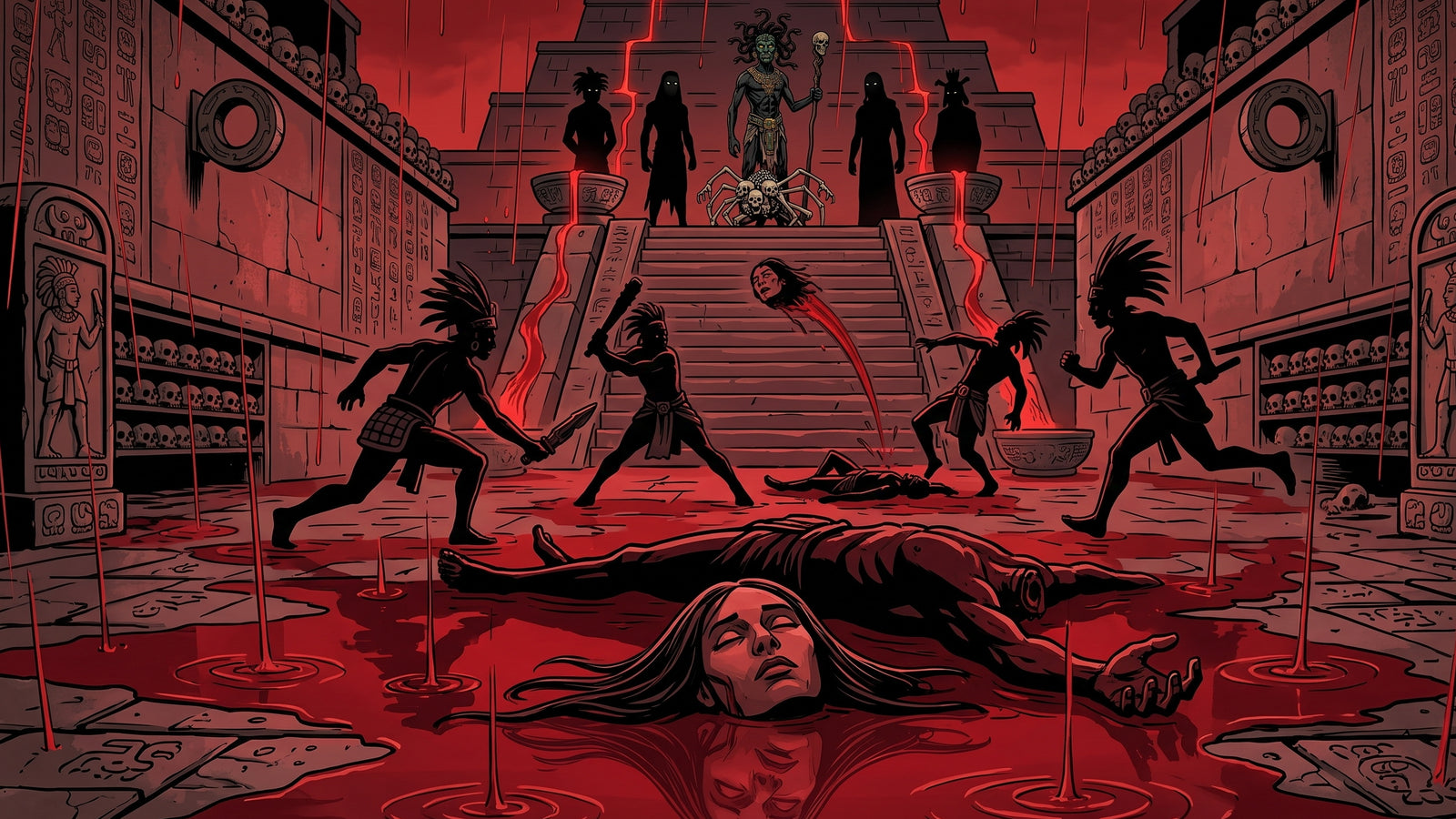
Na dole umierają. Na górze liczą.
W mitach Majów rytualna gra w piłkę nie była sportem — była sądem. Przegrana drużyna szła na ołtarz, a krew wspinała się po stopniach piramidy jako zapłata za to, że jutro wzejdzie słońce.
Aztekowie i Majowie wierzyli, że świat opiera się na krwi — nie metaforycznie, dosłownie: bez ofiar cykl się zatrzyma. Dlatego ołtarze stały na szczytach piramid, nie w piwnicach: krew miała płynąć w górę, do tych, którzy ją przyjmą.
Ta sama logika stała się ekonomią PANTHEON. Zasoby nie biorą się z powietrza — przychodzą z dołu, od śmiertelników, i wznoszą się ku bogom. A im bliżej jesteś zwycięstwa, tym więcej krwi za tobą.
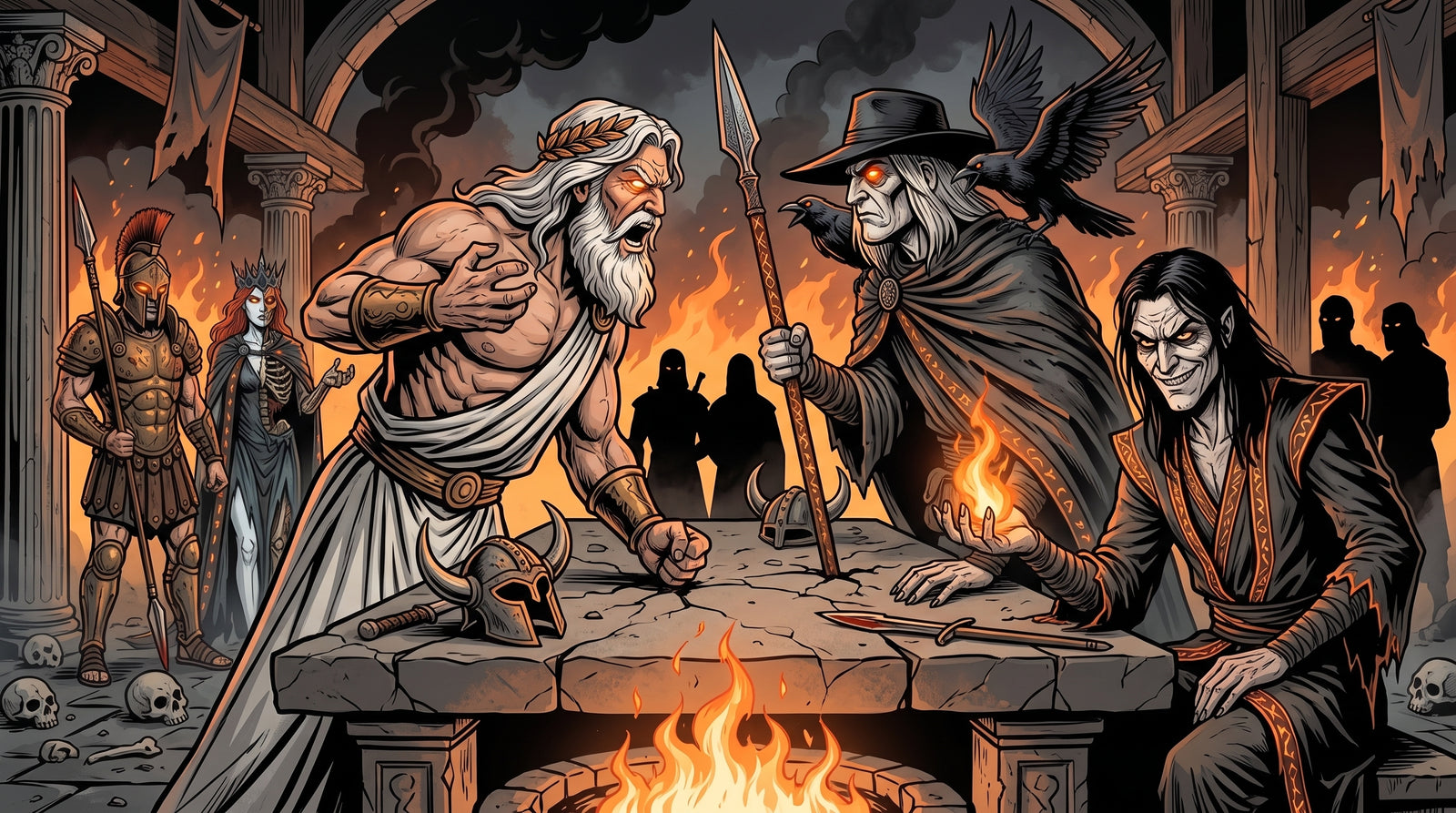
🔥 Ogień — śmierć to cena heroizmu
Grecy i Skandynawowie mieli jedną ideę: śmierć jest tego warta, jeśli będą o tobie mówić. Achilles wiedział, że zginie pod Troją — i poszedł mimo to.
Hybris: każda wygrana wojna daje +1. Każde dwie Hybris dodają siłę w walce — ale przy sześciu zaczyna się kryzys: frakcja, która wygrała zbyt wiele, bije samą siebie. W walce Ogień podwaja Płomień: dwa punkty stają się czterema.
Ogień nie kombinuje. Bije pierwszy i mocniej — i płaci za to własnym Ragnarokiem. Graj Ogniem, jeśli gromadzenie Bojowej Krwi kręci cię bardziej niż jej strzeżenie.
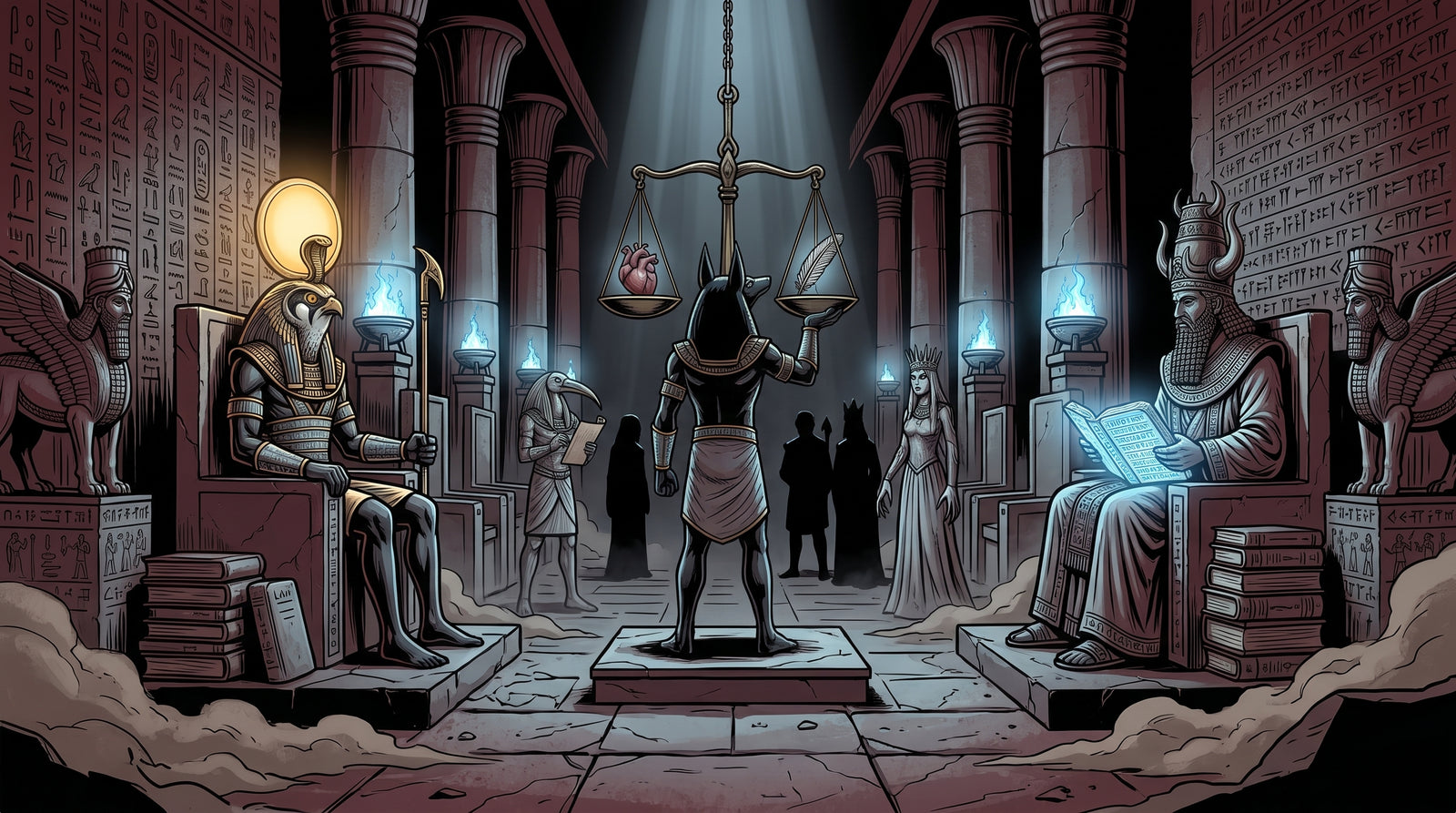
🪨 Kamień — śmierć to przejście do porządku
Dwie najstarsze cywilizacje pisma wyobrażały sobie zaświaty jako instytucję: waga, pióro, protokół — „Księga Umarłych” dosłownie zawiera prawidłowe odpowiedzi na egzaminie.
Maat: raz na rundę obejrzyj wierzchnią kartę talii i zdecyduj — zostawić czy wysłać na spód. Kamień jako jedyny wie, co będzie dalej. W walce podwaja Kamień — najtańszy, najnudniejszy, obronny zasób.
Kamień rzadko wygrywa efektownie. Wygrywa, bo przeliczył partię dwa ruchy naprzód, podczas gdy inni się rąbali. Graj Kamieniem, jeśli kontrola informacji cieszy cię bardziej niż siła.
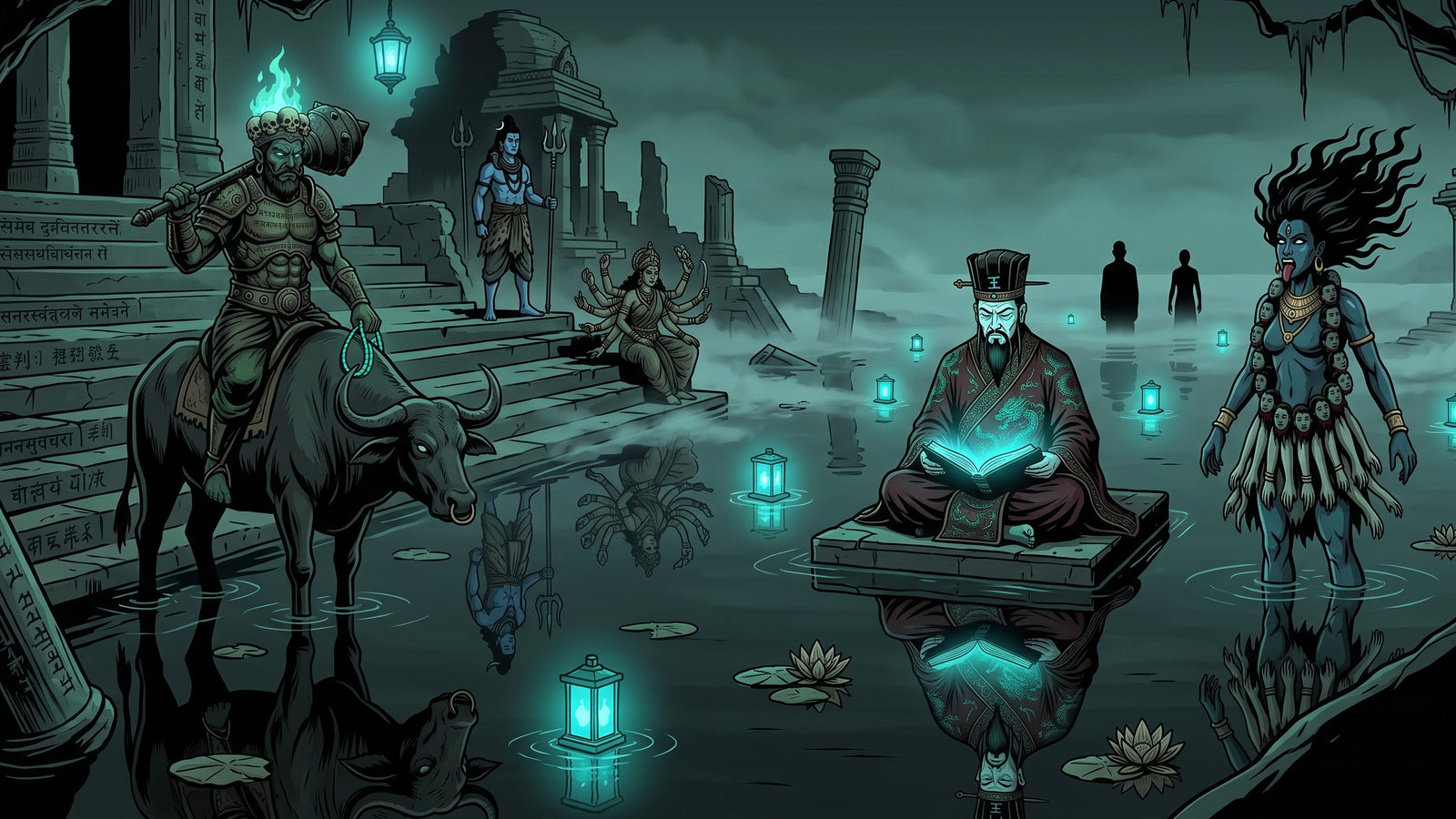
💧 Woda — śmierć to iluzja, wszystko płynie
Żadna z tych tradycji nie widzi w śmierci kropki. W Indiach to samsara — koło odrodzeń. W Chinach Diyu to dziesięć sądowych izb: duszę się sądzi — i odsyła w nowe narodziny.
Karma: gdy bóg Wody zostaje wybity, rzuć kostką — przy czterech lub więcej wraca, i to z dodatkowym zasobem. Wody nie da się wybić ostatecznie.
W walce Woda nie atakuje — gasi: każda karta Wody zdejmuje dwa Płomienie zamiast jednego, obracając siłę Ognia przeciw niemu. Graj Wodą, jeśli wolisz przeżyć wszystkich, niż wszystkich pokonać.
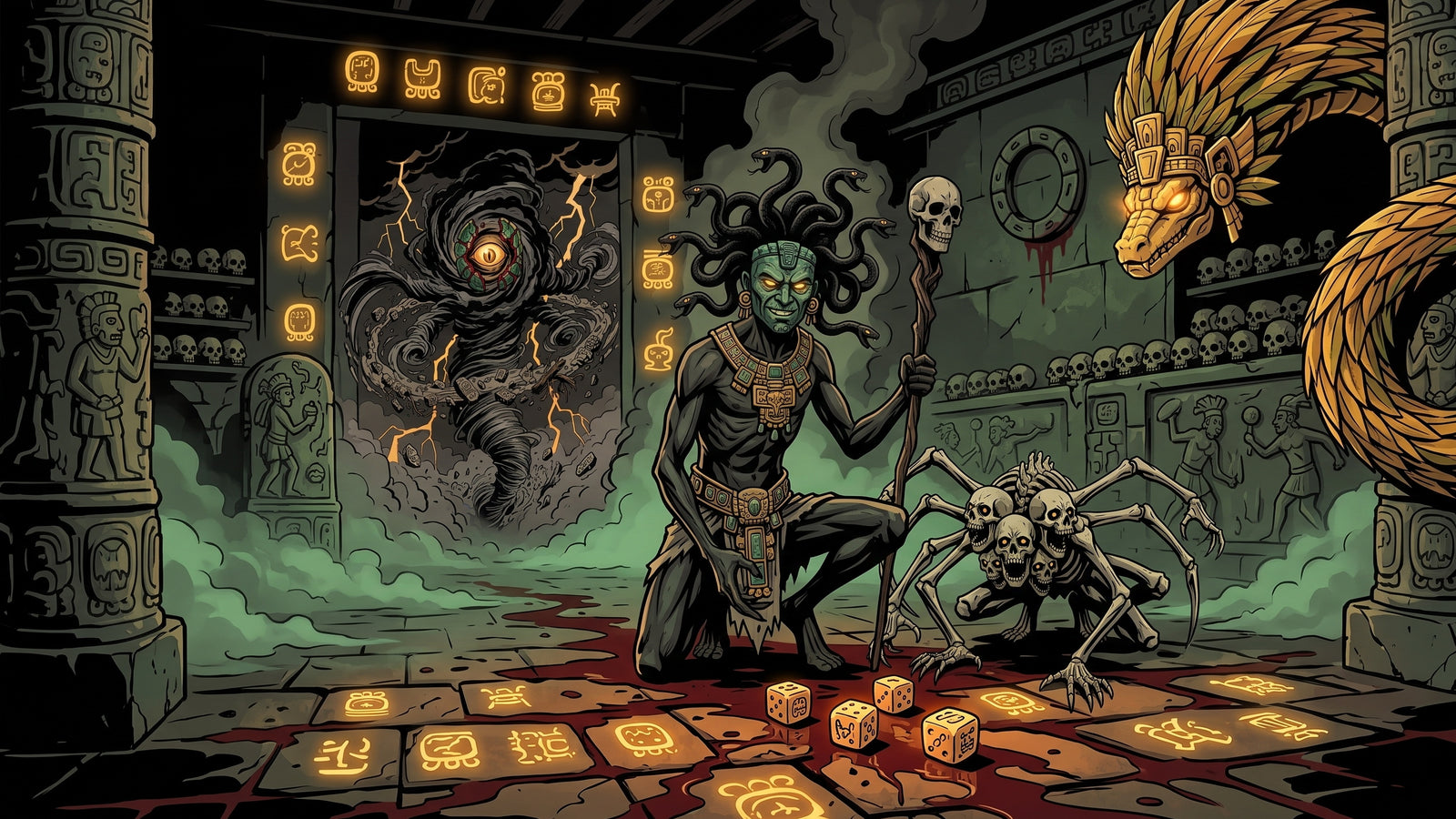
🌽 Kukurydza — śmierć to narzędzie
W „Popol Vuh” Bližniacy-Bohaterowie pozwolili Władcom Śmierci się zabić — po czym wrócili, podstępem uśmiercili Władców i nie wskrzesili ich. Słabsi pokonali silniejszych, czyniąc śmierć częścią planu.
Świadoma Śmierć: raz na rundę Kukurydza może sama zdjąć własnego boga z piramidy — i dostać za to Bojową Krew. Jedyna frakcja, która płaci sobą i na tym zyskuje. Bez trójkąta: co turę od nowa wybiera, z kim walczyć, a z kim handlować. W walce podwaja Krew: trzy punkty stają się sześcioma.
Kukurydza nie buduje najlepszej piramidy. Sprawia, że cudze upadają szybciej. Ta frakcja istnieje tylko w grze na czterech — trzech gra czysty trójkąt: twardszy, szybszy, bez jokera.
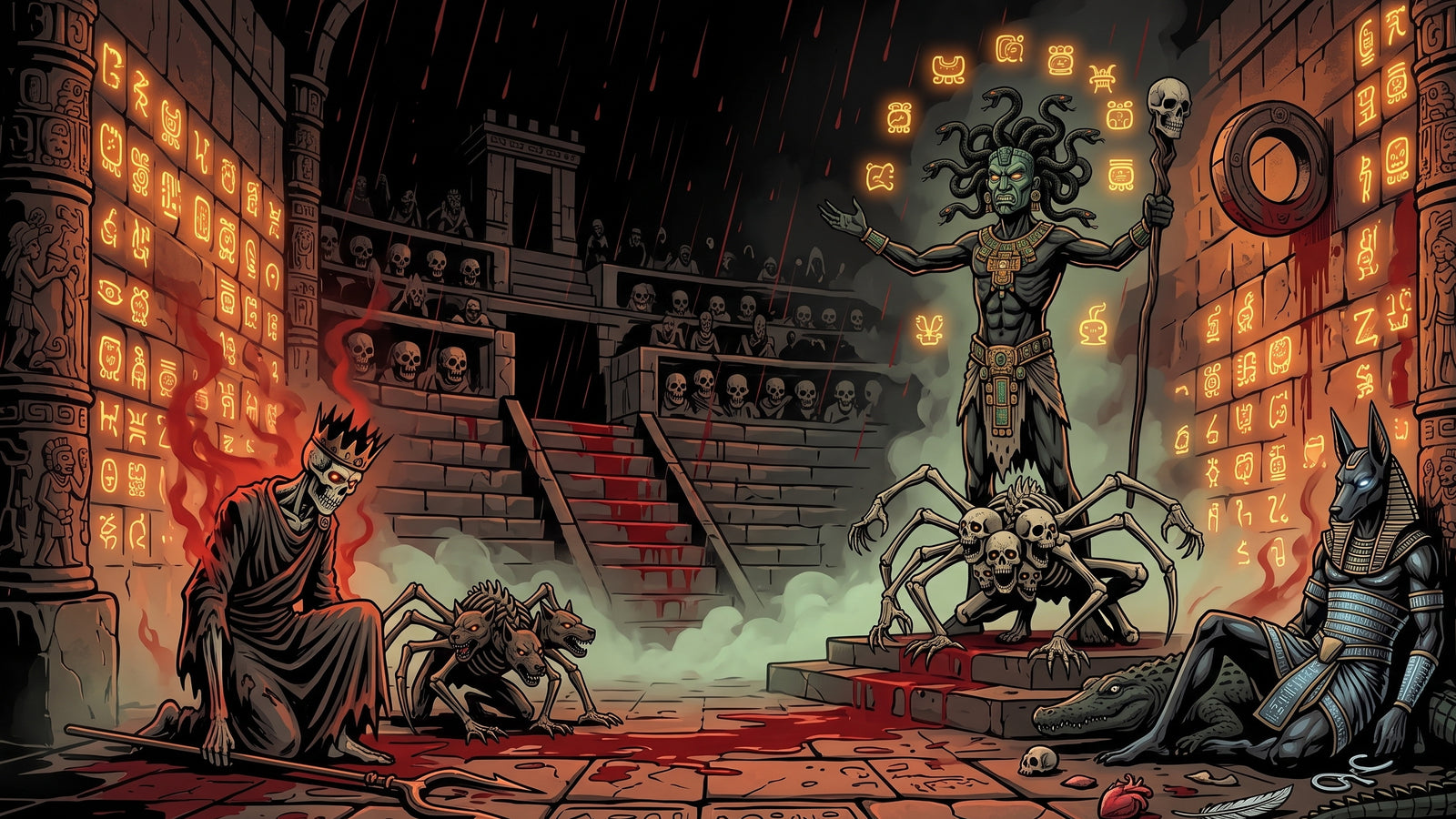
Każdy sam podkłada bombę do talii
Przed pierwszą turą każdy gracz wtasowuje do wspólnej talii jedną kartę Chaosu swojej mitologii. Ragnarok. Potop Enlila. Taniec Świwy. Władcy Xibalby. Wiesz, że tam są. Nie wiesz — kiedy.
Gdy karta Chaosu wychodzi z talii, gra się zatrzymuje i zaczyna się minigra: pojedynek na kości, samotna próba przeciw losowi, blef w maskach, gra w piłkę. Wygrasz — płaci przeciwnik. Przegrasz — płacisz ty.
Najsilniejszy nie zawsze wygrywa. Co partię lider z niemal ukończoną piramidą wyciąga dokładnie tę kartę, którą sam podłożył dwanaście tur wcześniej. Bomby nie da się rozbroić — można tylko nie stać obok, gdy wybuchnie.
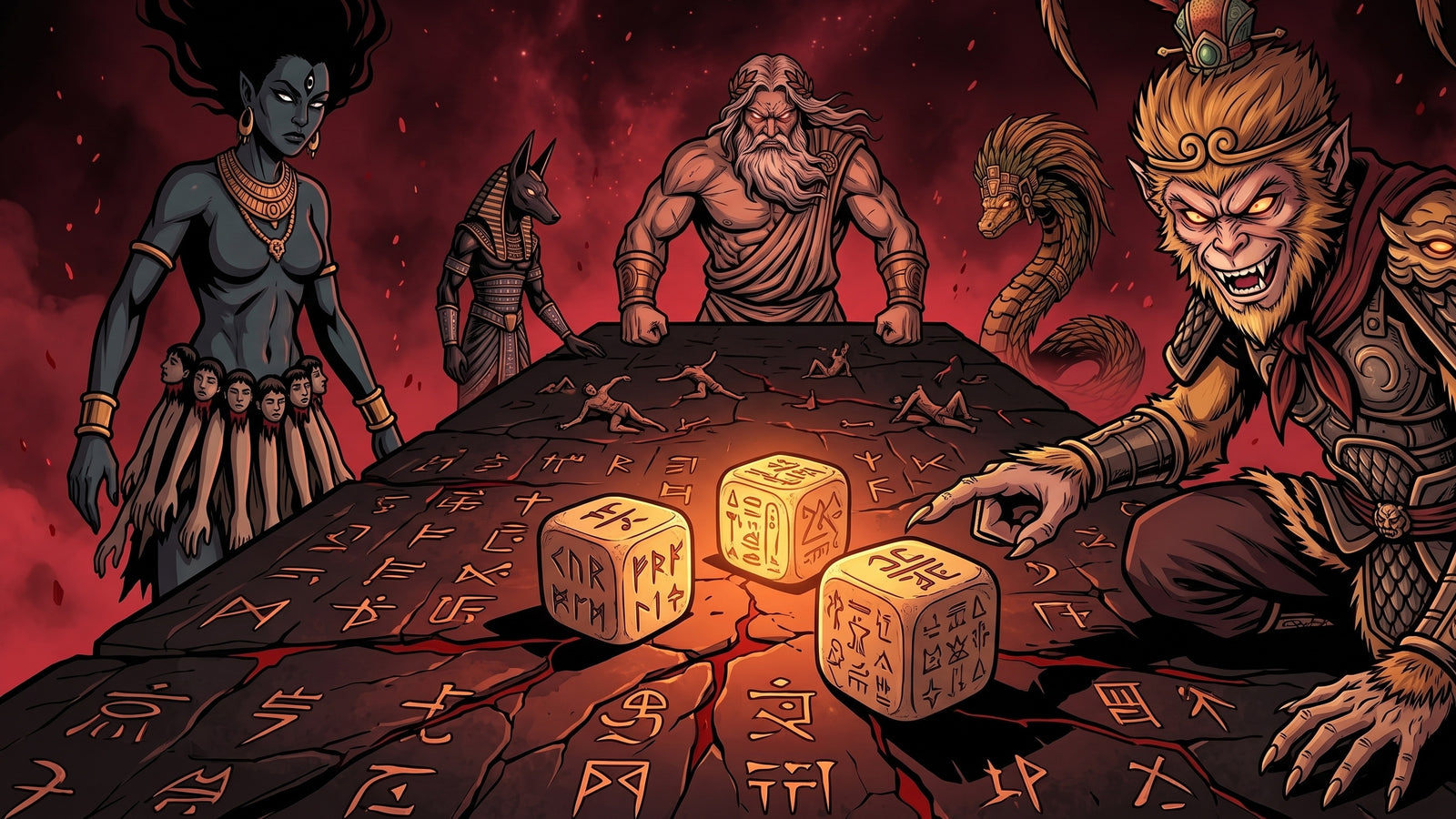
Więc gra Bóg w kości czy nie?
Możesz przeliczyć każdą wymianę. Wygrać wszystkie wojny, zebrać całą Krew, zbudować piramidę idealnie, dojść do finału pierwszy. A potem rzucić trzema kośćmi — i spaść ze szczytu sekundę przed zwycięstwem.
PANTHEON nie jest o tym, jak przechytrzyć rywali. Jest o tym, że nawet bogowie muszą układać się z przypadkiem — i że umiejętność ryzyka we właściwej chwili waży więcej niż umiejętność liczenia.
Einstein mówił, że Bóg nie gra w kości. Udowodnij, że się mylił.
Dowiedz się o starcie na Kickstarterze →
“God does not play dice with the universe.” „Bóg nie gra w kości ze wszechświatem”
“Einstein, stop telling God what to do.” „Einstein, przestań mówić Bogu, co ma robić”
“God not only plays dice, He sometimes throws them where they cannot be seen.” „Bóg nie tylko gra w kości — czasem rzuca je tam, gdzie ich nie widać”
„Gdy bogowie stworzyli człowieka, przeznaczyli mu śmierć, a życie zachowali dla siebie.”
Bliźniacy Herosi pozwolili Panom Śmierci się zabić — i wrócili. Potem pokazali Panom, jak zmartwychwstać. Panowie zapragnęli spróbować. Bliźniacy ich nie wskrzesili.
„Giną stada, giną krewni, i ty sam umrzesz — lecz sława nie umiera nigdy.”
„O serce moje, nie występuj przeciwko mnie jako świadek.”
„Jak człowiek zrzuca znoszone szaty i przywdziewa nowe, tak dusza porzuca zużyte ciała.”
„Nie wiem, czy byłem człowiekiem, któremu śniło się, że jest motylem, czy jestem motylem, któremu śni się, że jest człowiekiem.”
„Czas to dziecko grające w kości; władza królewska należy do dziecka.”
„Alea iacta est” — kości zostały rzucone.